

(PerMariam) — Leo XIV’s visit to France is already proving to be more of a success than anticipated, as hundreds of thousands of people have flocked to greet him and Muslim critics have expressed concern at a Catholic revival. So what is the import of the papal voyage to the Eldest Daughter of the Church?
The Pontiff landed in Paris early on Friday morning for a brief trip which will conclude on Monday evening. Its very existence points to the importance he placed on making the voyage. Leo’s diary was already too full and it was Cardinal Jean-Marc Aveline – president of the French bishops’ conference – who lobbied the papal household to squeeze it into an already packed autumn calendar. Leo agreed and thus the trip began to take shape.
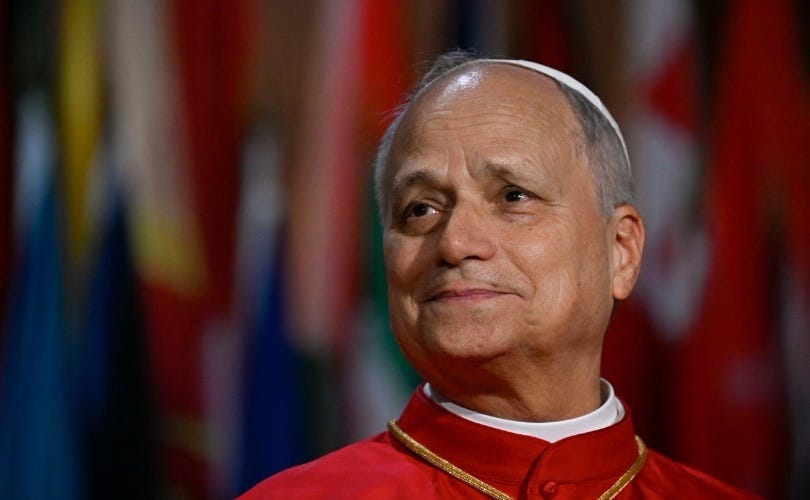
But it comes at a notably awkward time, just weeks after France legalised assisted suicide and euthanasia. Papal visits are normally timed to avoid the appearance of siding with any individual politician, such as just before or after an election. Such visits would also normally not take place so soon after the passing of legislation so directly aimed at attacking the Church’s moral teaching.
The visit was announced in May, prior to the bill being passed: but Leo had already raised the matter with President Emmanuel Macron during their private audience at the Vatican in April. Cdl. Aveline revealed recently that Leo’s arguments against the bill fell on deaf ears during that meeting.
This set the tone for the trip. It was always to be a celebration of French Catholicism and an act of homage to two great centres for European Catholicism – Notre-Dame Cathedral and the Shrine of Lourdes. Now, in the context of the end of life bill, the papal voyage has had to also operate under the shadow of this direct attack by the state on the Church’s teaching.
So far, Leo has exceeded expectations on this front. The Holy See was polite but firm in refusing any offers by Macron for extra one-on-one time with the Pope, thus ensuring that Macron was not treated with any extra warmth than was strictly necessary for the visit. To do otherwise would have given the impression that the Church was not bothered by the bill’s legalisation. In response, Macron declared he would not attend any of the papal liturgies.
The first day of the French voyage would see Leo tested on the entire purpose of the trip, as he would meet privately with Macron, then address Macron and the full assembly of politicians, before soon meeting with the Catholic community in Notre-Dame. It was the day in which his role as Pope would be under scrutiny: both in the ‘external’ stance he presented to the world and the inward facing countenance on display for the Church.
Naturally, no details were given of the private encounter between Leo and Macron at the Elysée Palace. But his speech directly after their 50-minute conversation was forthright. As often happens during Leo’s foreign travels thus far, the speech to politicians was poignant, striking and largely well written.
The Pope praised France for its great history, and linked its prowess to the work of individual Catholics and the Church over centuries. France is great only insofar as it stays true to the spirit and ideals which made it that way, he said – namely Catholicism and the principle “that the world may have life.”
Indeed this phrase was repeated many times throughout his first speech of the trip, leaving the politicians in no doubt as to the Pope’s real message. Nor would Leo’s words have been lost on Macron, who sat on the same stage. In no uncertain terms, Leo emphasised the importance of protecting the sanctity of life at all ages, particularly in latter years: “I firmly reiterate that the protection of the right to life constitutes the indispensable foundation of every other human right.”
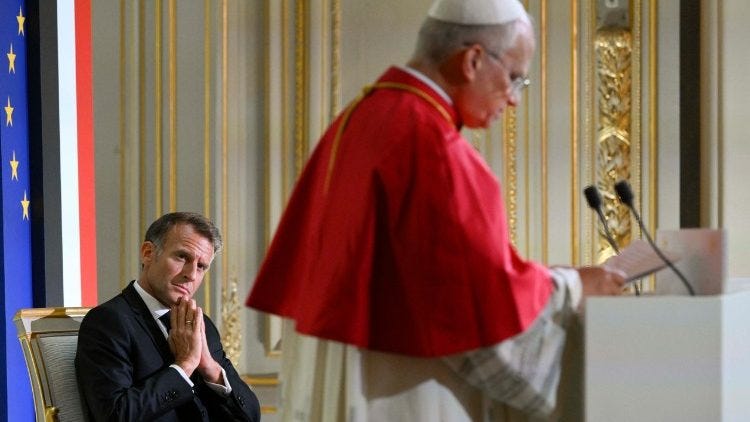
He further cautioned that technological advancements can aid man only when at the service of the good – another dig at the materialist society which pushes euthanasia and assisted suicide as the swift solution to troublesome old age.
The Pontiff also schooled Macron about the proper relationship between Church and state by using the president’s own words from a prior speech. The smartly dressed members of parliament leaving the glistening halls of the Elysée Palace were thus firmly informed that French Catholics are a blessing to the state, and that the nation itself is only great when it adheres to the Catholic values which made it that way.
Even stronger themes were employed by Leo when he addressed the UNESCO headquarters shortly afterwards. In a swift summary of certain elements of Catholic social teaching, he based everything in the ultimate meaning of a human being and the purpose of human life. From this premise, Leo discoursed on the importance of protecting life and the manner of building a just society around this principle.

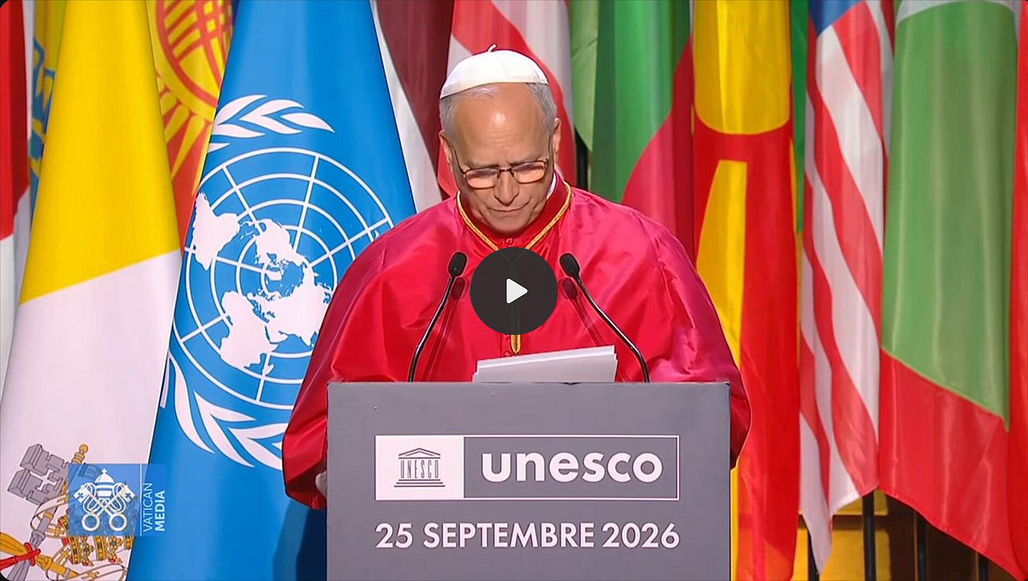
“The touchstone by which we can assess our commitment is the care we show for the littlest and for the poor: children in their mothers’ wombs and in the various theatres of war, persons with physical and intellectual disabilities, the elderly, migrants, refugees, and all those arrogantly excluded as unproductive,” he said.
Pope Leo’s discourses to the political bodies is markedly different to those which have been heard coming from the pontiff in recent years: there is once again Catholic content in such addresses, rather than simply being speeches which any UN secretarial staff member could have drawn up. The ‘external’ side of the trip was decidedly in defence of the sanctity of human life and for the re-Christianisation of society.