

Vocal Belgian bishop declares he will ordain married clergy by 2028
Bishop Johan Bonny has a long history of heterodox moves, with this latest announcement putting him at odds with centuries of unchanging teaching.

VATICAN CITY (PerMariam) — An outspoken Belgian bishop has declared he will start ordaining married men as priests no later than 2028, thus attempting to force the Holy See’s hand to approve the measure which is widely prohibited for clergy in the Latin Rite.
Bishop Johan Bonny of the Diocese of Antwerp, published his plans Thursday announcing how he will implement the Synod on Synodality in his diocese. The text, published in both Dutch and English, contains Bonny’s clear blueprint for decisive action to radically transform the face of the diocese which he has led since 2009.
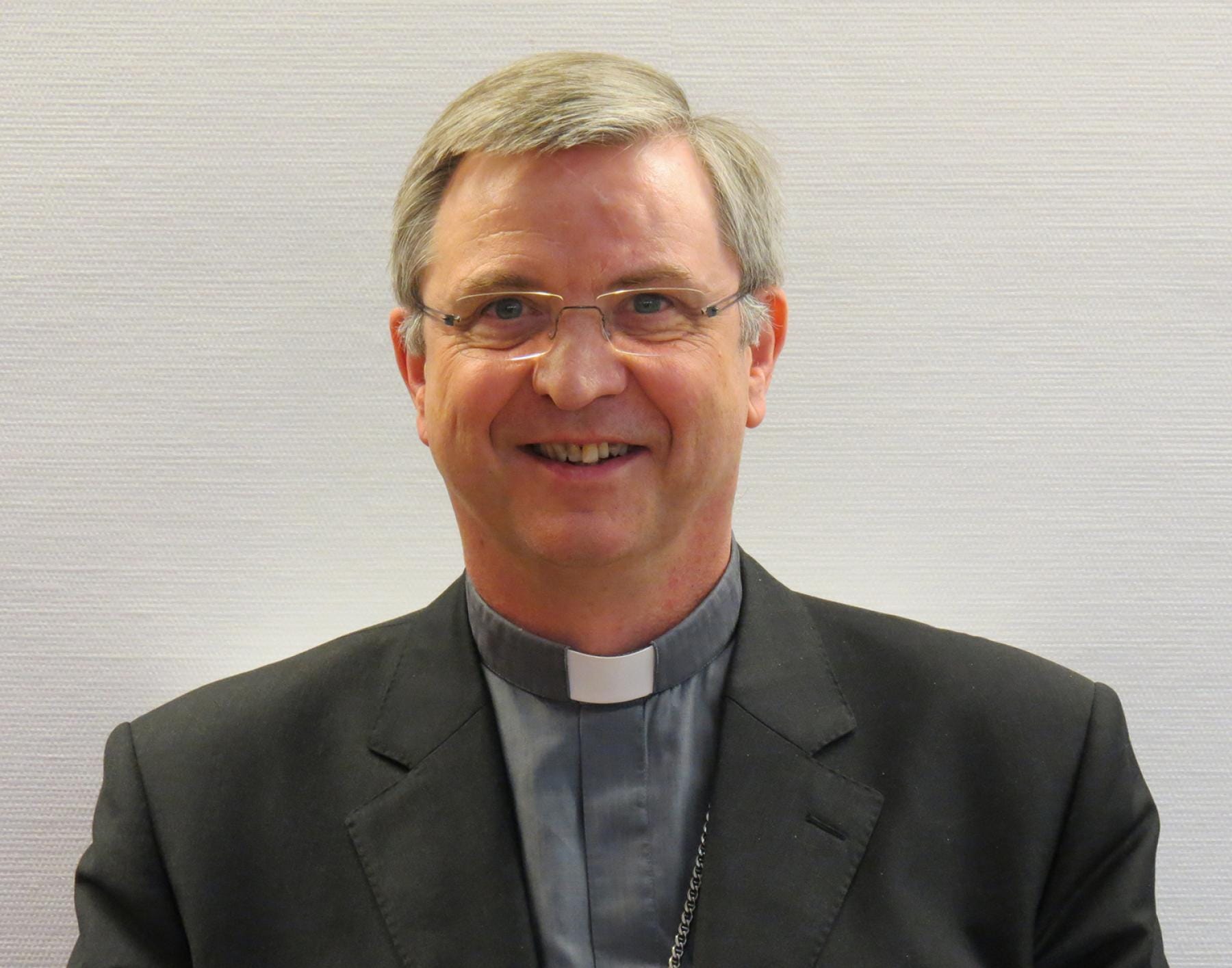
Part of this involves ordaining married men to the priesthood, something he described as inevitable rather than merely theoretical. “The question is no longer whether the Church can ordain married men as priests, but when it will do so, and who will do it,” Bonny wrote.
In doing so, Bonny repeated the oft-used arguments of activists who have been calling for a married clergy in recent years, chief among which is the drastically low number of vocations, the precedent set by having married clergy of the Eastern rites or Anglican Ordinariates serving in the area. So too, he referenced the issue of clerical sexual abuse and the mental health of priests living alone.
“It is an illusion to think that a serious synodal-missionary process in the West still has a chance without also ordaining married men as priests,” he opined.
Laying his cards fully on the table, Bonny thus outlined a timetable culminating in less than two years, by which time he attested he will be ordaining married clergy. The bishop wrote:
“For these reasons, I will make every effort to ordain married men as priests for our diocese by 2028. I will approach them personally and ensure that by then they have the necessary theological training and pastoral experience, comparable to that of other priest candidates. This preparation will be transparent but discreet, away from the media spotlight.
The next two years will also serve to ensure the necessary communication and arrangements, both with the Belgian Bishops’ Conference and with the Vatican, as we can learn from each other’s experiences and insights. For many a bishop, the ordination of married men has become a matter of conscience. At that level, too, transparency, accountability, and evaluation are important for the credibility of the Church.”
The question of married priests, or the so-called viri probati, has been a polemical topic pushed with renewed vigor ever since the Amazon Synod held at the Vatican in 2019. It was also discussed during the multi-year Synod on Synodality held from 2021 to 2024. Whilst a number of high-ranking Synod officials personally were open to the idea, or even championed it, Pope Francis firmly rejected changing the rule of celibacy for Latin-rite clergy in the Catholic Church.
The Latin Rite of the Catholic Church does not permit for married clergy, albeit with some rare exceptions such as the married clergy of the Personal Ordinariate for former Anglicans. However the Eastern Catholic Churches do permit the practice of married clergy, an aspect which has given further fuel to the fire of activists in the West.
Some decades prior, Pope Paul VI already examined the arguments for and against clerical celibacy in his encyclical Sacerdotalis Caelibatus, stating that the law of priestly celibacy – laid out in imitation of Christ’s celibate, full sacerdotal gift of self – “has been guarded by the Church for centuries as a brilliant jewel, and retains its value undiminished even in our time when the outlook of men and the state of the world have undergone such profound changes.”
Bonny’s citation of the Eastern churches acceptance of the practice of a married clergy was also dealt with by Paul VI by quoting from the Fathers of the Church, whose teaching on the celibate priesthood has formed a key part of the Latin Rite’s unchanging teaching for centuries.
Furthermore, as Paul VI noted, the Eastern rites forbid a priest from marrying after ordination, and only permit celibate priests to become bishops. “This indicates that these venerable Churches also possess to a certain extent the principle of a celibate priesthood and even of the appropriateness of celibacy for the Christian priesthood, of which the bishops possess the summit and fullness,” Paul VI wrote.
Indeed the Church’s protection and promotion of the benefits of a celibate priesthood have been championed still to this day by leading prelates and successive popes since the Second Vatican Council, including Pope Leo XIV. Cardinal Joseph Zen wrote how “one major benefit to celibacy is that it allows the priests to express their ‘zeal about the things of the Lord’ and serve the Word of the Lord without distraction (1 Cor. 7:32–35).”
In 2018, Cardinal Robert Sarah – then-prefect of the Congregation for Divine Worship and the Discipline of the Sacraments – condemned the viri probati proposal, saying, “the plan, again advanced by some, to detach celibacy from the priesthood by conferring the sacrament of the Order on married men (“viri probati”) for, they say, ‘pastoral reasons or necessities,’ would have serious consequences, in fact, to definitively break with the Apostolic Tradition.”
During a number of audiences with bishops, priests and seminarians last June, Leo XIV repeatedly cited the importance of clerical celibacy, giving no indication of the law being changed.

Celibacy, the Pope told seminarians, is “a charism to be acknowledged, conserved and educated.”
Expounding on the theology of the priesthood and the historical developments regarding Holy Orders, Thomistic theologian Dr. Peter Kwasniewski likened the push for married priests to a modern day repetition of Satan’s “non serviam,” and part of a push by activists who “treat the liturgy as their own possession, to change and modify at whim.”
Bonny’s declaration of war with the Pope over the rejection of clerical celibacy is a certainly a shot across the bow for Leo. Yet it remains to be seen how exactly the bishop anticipates being able to fulfill his promise, since it would require Leo to reject centuries of Tradition and papal teaching, and make a change to Canon Law – all in less than two years.
This kind of move is by no means foreign to Bonny whose record of heterodoxy on Catholic morality is well documented, and includes arguing for the recognition of homosexual relationships. Bonny appears to be acting in the same style which worked for him under Francis, but he might yet find that Leo’s attention to law and Tradition are not as flexible.