

Synod office washes hands of Study Group 9's homosexuality report
The General Secretariat of the Synod stated that “these reports cannot be attributed” to them

VATICAN CITY (PerMariam) — The official Vatican body behind the Synod on Synodality has washed its hands of a controversial study group document – which included testimonies from two “married” homosexual men and implied same-sex “relationships” are not inherently sinful – while conspicuously declining to address whether the report contradicts Catholic teaching.
According to a report from Spanish media outlet Religión Confidencial, the General Secretariat of the Synod was asked to respond to criticism over the group’s May 5 publication, in which they state “sin, at its root, does not consist in the (same-sex) couple relationship, but in a lack of faith in a God who desires our fulfilment.”
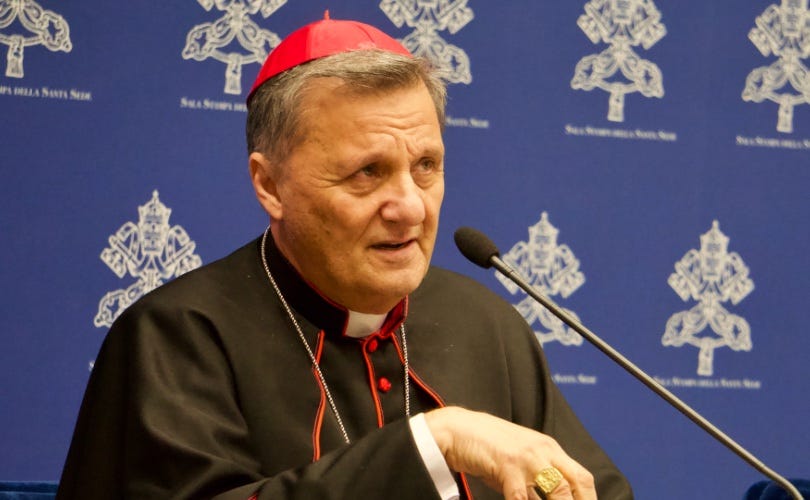
Seeking to distance itself from direct involvement in the report, the General Secretariat of the Synod stated that “these reports cannot be attributed” to them, insisting that the 10 working groups established by Pope Francis to examine specific topics from the Synod on Synodality “worked, as is logical, autonomously.”
Indeed, the General Secretariat emphasized that its logo “doesn’t even appear” on the document, rather “only that of the synodal process,” as supposed evidence of its passive role in the publication of the study group’s Final Reports. Notably, the Secretariat did not deny allegations that Study Group 9 has challenged longstanding doctrine of the Catholic Church on sexual ethics, emphasising instead that “these reports are merely working documents.”
“Our work has been limited solely to the translation of the summaries, the editing of the reports and their publication and dissemination, in order to be consistent with the spirit of transparency and accountability that has characterized the synodal process,” the General Secretariat of the Synod stated.
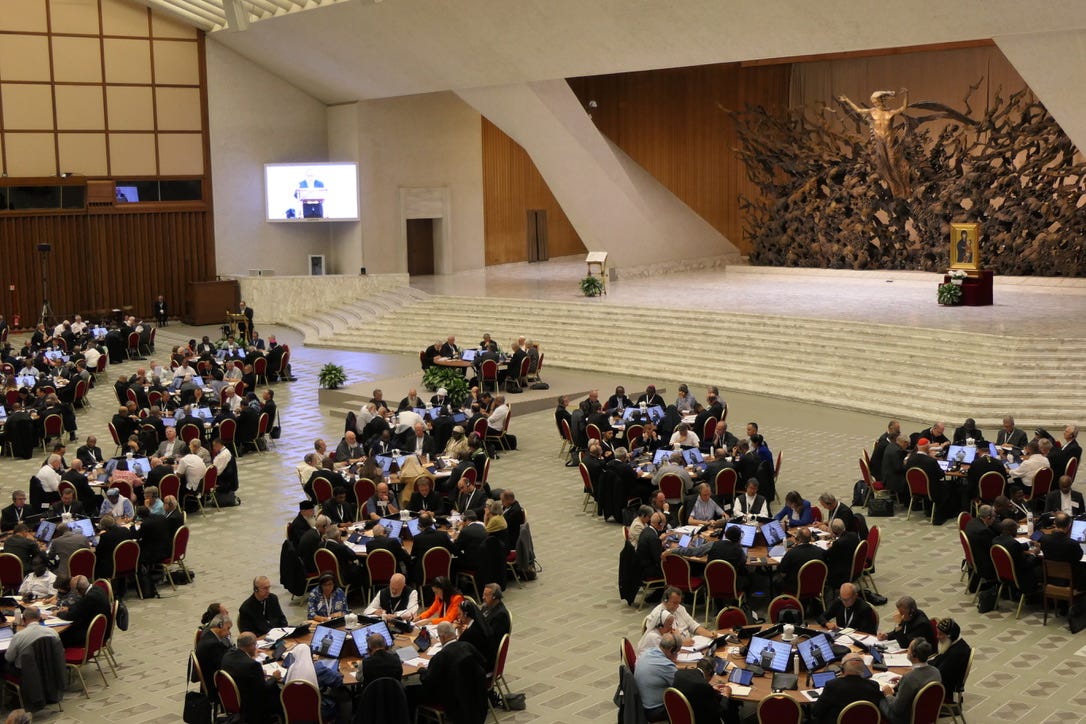
Influences behind the report
Shortly after the publication of Synod Study Group 9’s Final Report, titled “Theological criteria and synodal methodologies for shared discernment of emerging doctrinal, pastoral, and ethical issues,” the identities of those behind the anonymous testimonies used to build the document began circulating, revealing the influence of LGBT torchbearer Father James Martin, S.J.
The two men, both in same-sex “marriages,” were identified as Jason Steidl Jack – who, along with his “husband,” received a “blessing” from Martin just one day after the release of Pope Francis’ 2023 declaration Fiducia Supplicans, which introduced “blessings” for couples in “irregular unions” – and a Portuguese man also reportedly linked to Martin.
The Jesuit’s ability to exert influence over a working group he did not belong to contrasts starkly with the experience of Sister Josée Ngalula, one of the seven listed members of Study Group 9 but who did not provide any input in the document’s section on homosexuality.
In comments to the National Catholic Register, Ngalula – a Congolese member of the Sisters of St. Andrew who has been outspoken against LGBT ideology – noted her refusal “to enter into the debate regarding homosexual persons,” explaining that “this is not a major pastoral issue in my community.”
The African nun preferred instead to “leave it to those for whom this is a ‘major’ issue to discuss it among themselves,” while she focused on helping draft the report’s section on “active nonviolence.”
Ngalula’s reservation echoes the broader African posture. Indeed, it was the African bishops who, while somewhat internally divided, pushed back the hardest against the prescriptions of Fiducia Supplicans upon its publication, formally forbidding “blessings of homosexual couples” in some regions.
Critiques flow in
Synod Study Group 9’s uncritical promotion of homosexuality, and the testimonies of two men in same-sex “marriages,” have drawn widespread pushback from Catholics around the world.
High ranking prelates, including Cardinal Gerhard Müller, former prefect of the Congregation for the Doctrine of the Faith, and Dutch Cardinal Willem Eijk, have offered sharp criticism in the face of what the latter described as “a troubling departure from the Catholic Church’s consistent moral teaching.”
Eijk lamented the document’s presentation of the same-sex attracted men’s testimonies “without providing the Church’s moral framework for understanding these experiences.” By “elevating such testimonies without doctrinal commentary,” he argued, “the report effectively normalizes homosexual relationships within a Church context.” Furthermore, the cardinal decried the “synodal process” in itself as “a radical departure from Catholic moral theology.”
Müller similarly condemned the report, accusing the authors of ignoring “revealed truths” in the pursuit of “the recognition of LGBT ideology, which advocates nothing other than a materialistic view of humanity without God, the Creator, Redeemer, and Perfecter of humankind.”
This, says Müller, illustrates “the heretical relativization of natural and sacramental marriage” by the authors of the report.