

Synod office to provide ‘organizational support’ for Vatican's Amoris Laetitia meeting
While the Dicastery for Laity, Family and Life is responsible for organizing the event, the General Secretariat of the Synod will wield strong influence in directing its trajectory.

VATICAN CITY (PerMariam) — The meeting of bishops convened by Pope Leo XIV to discuss Amoris Laetitia will take place from October 7 to 14, as early details begin to emerge.
Now with dates confirmed for the week-long meeting, the presidents of national bishops’ conferences will begin to plan their attendance for October’s meeting, after Leo announced it in March.
A recent meeting of the General Secretariat of the Synod finalized October 7 to 14 as the dates, thus falling in line with the regular placement of such meetings or synods in October.
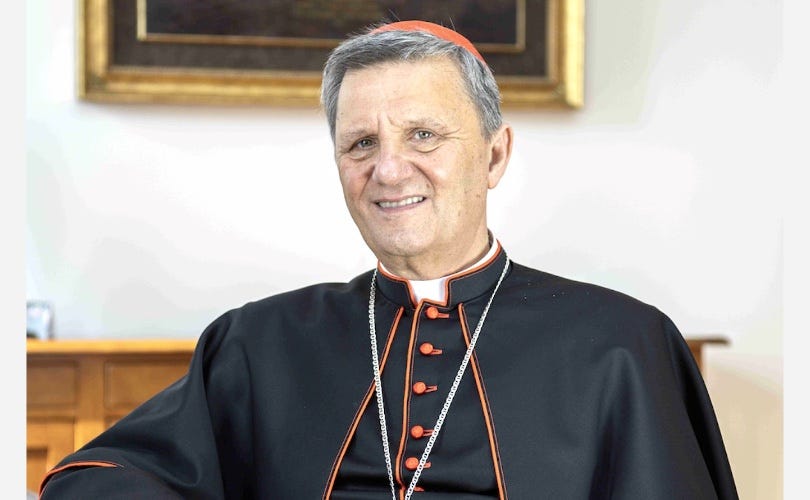
The General Secretariat was the body responsible for organizing the recent Synod on Synodality, and – though no official link was made – January’s extraordinary consistory bore classic signs of the Secretariat’s organizational influence.
Leo has tasked the General Secretariat to “offer organizational and methodological support,” while the Dicastery for Laity, Family and Life has been instructed to bear chief responsibility for preparing the event.
Given the concern expressed by many cardinals over the organizational style of January’s consistory, in which Synod style round table discussions were used to limit the time for free intervention, there are outstanding questions about how October’s meeting will unfold and whether time will be granted to air concerns.
The Vatican has been at pains to point out that the planned meeting between Leo and the bishops is not a synod, but simply an advisory or “consultative meeting.” Outside of Leo’s consistories – in January and upcoming in June – the October meeting will be the first such between a pope and only prelates for many years. The Synod on Synodality’s setup saw the participation of lay people as voting members, and at the time looked likely to be the format used in the future under Pope Francis.
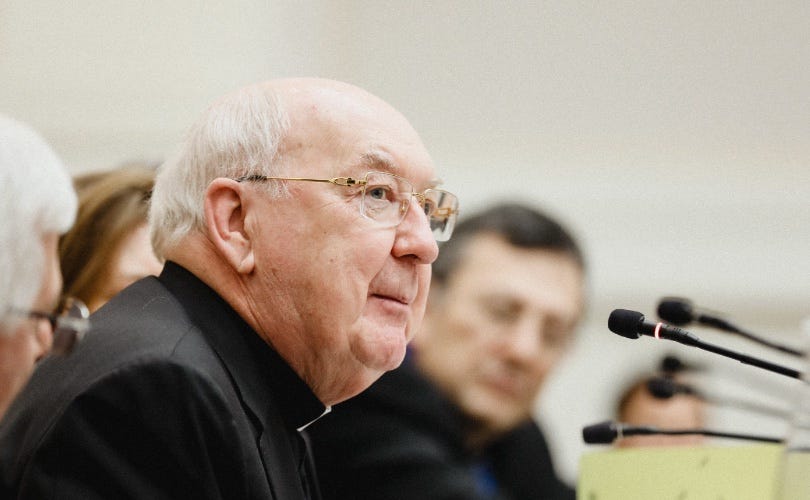
October’s event, however, is a subtle reset back to the normal and proper style of a synod – although it does not claim to be one.
As announced on March 19, Leo has convened the meeting in order to discuss how best to “proclaim the Gospel to families today, in light of Amoris Laetitia” and determine the reality in local churches.

“Our era is marked by rapid changes which make it necessary, even more than ten years ago, to give particular pastoral attention to families, to whom the Lord entrusts the task of participating in the Church’s mission of proclaiming and witnessing to the Gospel,” wrote Leo in announcing the event. He also stated that it was necessary at this particular time “in light of the changes that continue to impact families.”
The meeting marks the 10-year anniversary of the document published by Pope Francis, and which proved to be one of the earliest catalysts for ensuing controversy and doctrinal confusion, due to its passage arguing for the divorced and ‘re-married’ to receive Holy Communion.
Neither in Leo’s announcement, nor in the sparing details which have emerged about the October meeting, was any mention made of the controversy surrounding Amoris Laetitia. Similarly, no mention was made of the many requests to have Amoris formally corrected, especially since one of the Dubia signatories – Cardinal Walter Brandmüller – warned in 2015 that the interpretation of Amoris Laetitia which Francis later approved would be heretical.
Francis declared there was “no other interpretation” of Amoris Laetitia except the one provided by the Argentinian bishops of Buenos Aires allowing Communion for the divorced and remarried, and which he supported. This was then declared – in a June 2017 rescript – to be part of the Church’s magisterium.
It is precisely this silence about the controversy which has led to such interest from Vatican observers in the October conference, and speculation over whether Leo will simply ignore the problems or address them in his classically subtle style. Should the American Pope leave the issue of Holy Communion and Amoris out of the conversation, then it would appear as an severely lost opportunity to rectify the crisis identified by many, and also undermine his aim to unify the Church.
Demonstrating the still prevalent tension surrounding the text, a conglomerate of Catholics issued an open letter to Leo in September urging him to rescind a number of papal texts, including Amoris Laetitia. “We beseech you to annul Pope Francis’s June 5, 2017 rescript, which conferred special magisterial value on the heterodox interpretation of the ambiguities of Amoris laetitia, and clearly reiterate that those who are divorced and civilly remarried and living more uxorio cannot receive sacramental absolution nor, as public sinners, Holy Communion,” read the letter.

The respected American philosopher Edward Feser opined in July about Amoris and Pope Francis that “one could argue that of all his controversial acts, this was the most scandalous.” For Feser, the lines of Amoris represented an attack on Christ’s teaching against divorce. To do this “would thus implicitly either deny Christ’s divinity or, blasphemously, put one’s authority above even His,” Feser warned.
Officials at the Dicastery for Laity, Family and Life have not responded to requests from this correspondent for an interview regarding the October meeting.