


VATICAN CITY (Per Mariam) — The return of Pope Leo from his summer vacation serves as a useful moment for both the pontiff and the wider Church to take stock of his pontificate after another year, with a number of key agenda items demanding his early attention.
As the motorcade departed the papal villas in Castel Gandolfo on the evening of July 27, Vatican observers began to resume their normal posts as Leo’s return to the Vatican signalled the pope’s return to work. This year he took nearly the full month of July for a personal holiday, and though it was interspersed with some lighter duties and trips to pilgrimage spots, it was overall a period of quiet.
No official meetings or audiences were scheduled and it is the longest single block of time that Leo has spent away from work since he was elected – last summer he took two separate and shorter holidays at Castel Gandolfo.
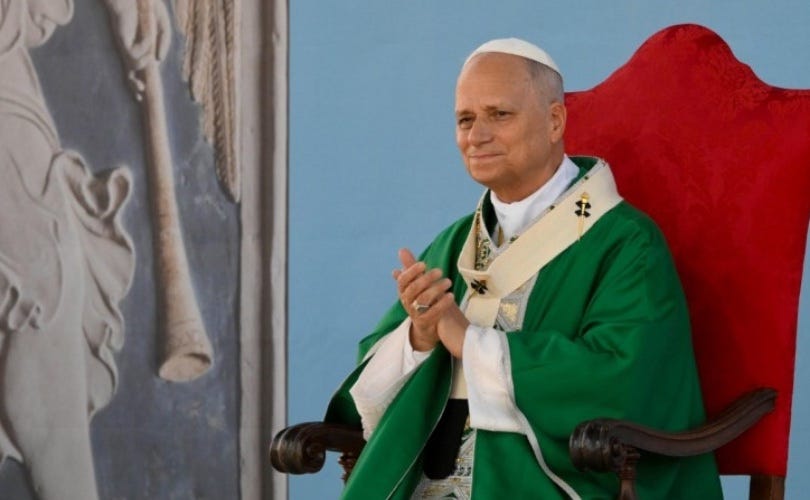
So what happens now? The General Audiences have resumed their weekly slot on the calendar, and Leo is continuing his gradual progress through the documents of the Second Vatican Council which is forming the basis of the weekly catechetical meetings.
Leo’s chief personal secretary, Monsignor Edgard Rimaycuna has returned from his own brief holiday in Peru – which served also as a useful visit ahead of Leo’s own upcoming November visit – and is once again positioned at the Pope’s side.
August is still firmly holiday time for Italy as a whole, and a quiet August in the Vatican provides Leo an opportunity to return to work without quite as much clamor around him. A full schedule awaits the Pontiff this autumn, with foreign trips to France and South America, alongside the highly anticipated meeting on Amoris Laetitia at the Vatican.
One task that is already past its deadline is responding to the Society of Saint Pius X, after the Society began the process of appealing the July 2 Decree against the six bishops’ automatic excommunication. Their appeal was delivered to the Holy See on July 11, and under the provisions of Canon Law the Holy See had 30 “useful [read ‘working’] days” to respond. That timeframe has now definitely concluded.
Give the public stance and discourses of the SSPX post-consecration, it is unlikely that the Dicastery for the Doctrine of the Faith will see any reason to change the content of its decree – if anything, it will simply point to the arguments regularly published by the SSPX as further proof of the Decree’s necessity.
With the 30-day timeline now passed, the SSPX must canonically presume the Vatican’s silence indicates a rejection of its preliminary recourse, and thus continues further into the appeal process. This certainly pushes the theme of the SSPX into the public discussion, but also that of the traditional Mass.
Within days of the July 2 Decree and Note being issued from Cardinal Fernández’s desk, canonists were tearing their hair out over inaccuracies and errors. This is a problem which Pope Francis often experienced: having Fernández publish a text only for it to come back to bite them in a manner far more viciously than they had imagined. The cardinal’s lack of canonical expertise is showing.
For some reason – which many have questioned – Leo decided to have Fernández take sole responsibility for negotiating with the SSPX prior to the consecrations. That itself appeared to be a factor in the breakdown of negotiations between the two sides.
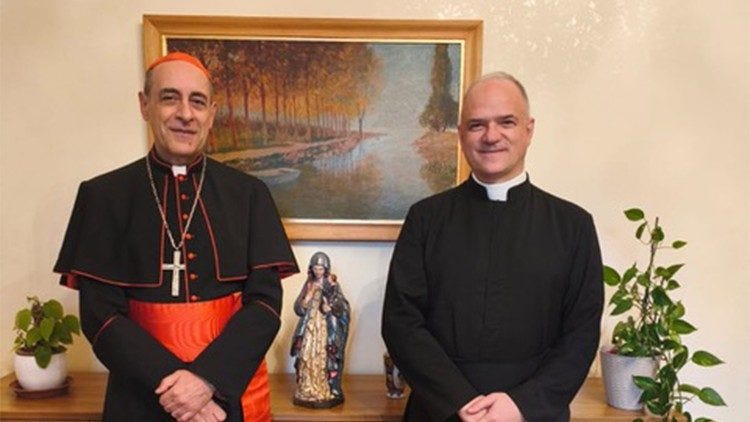
If he wishes to avoid a protracted and messy canonical argument with the SSPX then Leo might be well advised to take more of a direct role, or at least to assign it to someone in the DDF with actual canonical knowledge.
An intrinsic part of the SSPX question is the future of the traditional Mass, an issue which has only taken on new urgency in light of the Holy See’s demand for Catholics not to attend the Society liturgies. {Although on that front, even the Holy See’s own documents do allow for Catholics to attend such liturgies under certain conditions}

Leo has as yet appeared unwilling to make any strong move regarding the traditional Mass, meaning that the restrictions of Traditionis Custodes (TC) remain very much in force: both on paper and in reality. True, he encouraged the French bishops to find “concrete” ways to “generously include” Catholics attending the traditional Mass in the wider life of the Church. So also did he encourage the bishops of England and Wales to write to the Vatican seeking exemptions from TC, which would be granted.
But those are two very minor plasters on a gaping wound. TC itself has been described by some canonists as lacking legal authority – thanks to the errors present in Cardinal Arthur Roche’s text. The continued enforcement of TC will do nothing but further engender division within the Church, and Leo has professed he is a pope in search of unity.
“If you want peace in the Church right now – tell the Pope it’s time to derestrict the traditional Latin Mass,” said canonist Father Gerald Murray recently. “If you’re going to tell Catholics not to attend SSPX Masses and other sacraments, then pastoral charity demands that you make available to those people legitimate places to go.”
He is not alone. A growing number of prelates are now calling on Leo to change course on the traditional Mass, with a voice and sense of urgency that is much stronger than this time last year. Whether this urgency is because he has been in the throne over a year without making any notable change, or it is thanks to the SSPX’s consecrations, but it is present nonetheless.
Cardinal Burke even elevated his own rhetoric on the matter as he urged Catholics to “fight” and “suffer” to ensure access to the traditional Mass.

The unity which Leo desires requires peace, respect for law and respect for Tradition: TC undermines all three.
Changing course on TC could be helped by a change of prefect at the Dicastery for Divine Worship, along with changing the secretary, who in this case is even more vitriolic against the old rite that DDW prefect Cdl. Roche. Both the cardinal-prefect and the secretary Abp. Vittorio Francesco Viola have served their five-year terms.
Replacing these two with prelates more in line with Tradition, or just armed with sound liturgical knowledge, would win Leo much support from corners of the Church which have taken beating upon beating over the last several years. While rumors of Roche’s departure have flourished in recent months, firm confirmation remains lacking. But coming out of a summer recess and into a new academic year is the perfect time for a pope to effect such changes.
Last summer was the Pope’s first break after the whirlwind of his election, and consequently expectation of great changes after his break were not immensely high. This time around, many are keenly looking for Leo to act.