

(PerMariam) — The ancient custom of visiting seven churches on the evening of Maundy Thursday is believed to have originated in Rome, at the instigation of St. Philip Neri.
Neri, beloved by many in the city as one of the great Apostles of Rome, had already popularized the seven churches pilgrimage in the Eternal City, visiting the seven main basilicas. But the Maundy Thursday version became a particular way in which to accompany Christ on the seven final places He visited leading up to His death.
The seven locations as recorded in the Gospels are:
Christ prays in the Garden of Gethsemane, before being arrested by the soldiers.
Christ is taken to Annas, father-in-law of the High Priest Caiaphas. annas questions Him of His teaching, and Christ is struck in the face by an attendant.
Christ is taken before Caiaphas, who accuses Christ of blasphemy and rents his garments upon doing so.
Christ is brought to Pontius Pilate and questioned if he is a king.
Christ is taken then to Herod, who questions him, mocks him by dressing him in a white garment and sends him away.
Christ is brought back before Pilate once again. Pilate asks the Jews what to do with Him, and then washes his hands as he frees Barabbas.
Christ is crucified on Mount Golgotha and dies.
Keen to harness the devotion to the crucified Lord, Neri thus developed the custom of visiting any seven churches around Rome, and their various Altars of Repose, in order to pray before the Blessed Sacrament and keep Christ company as the Passion begins.
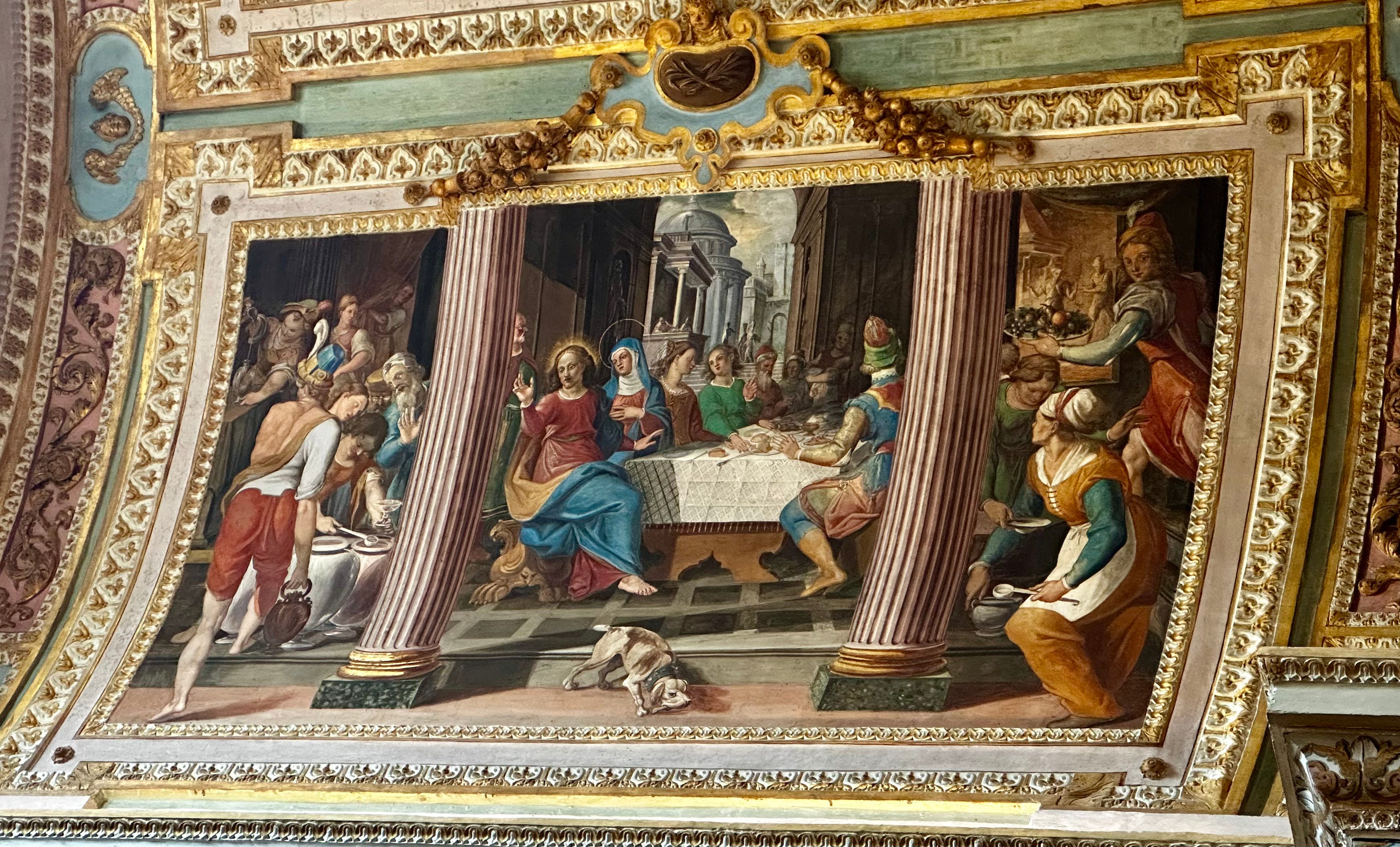
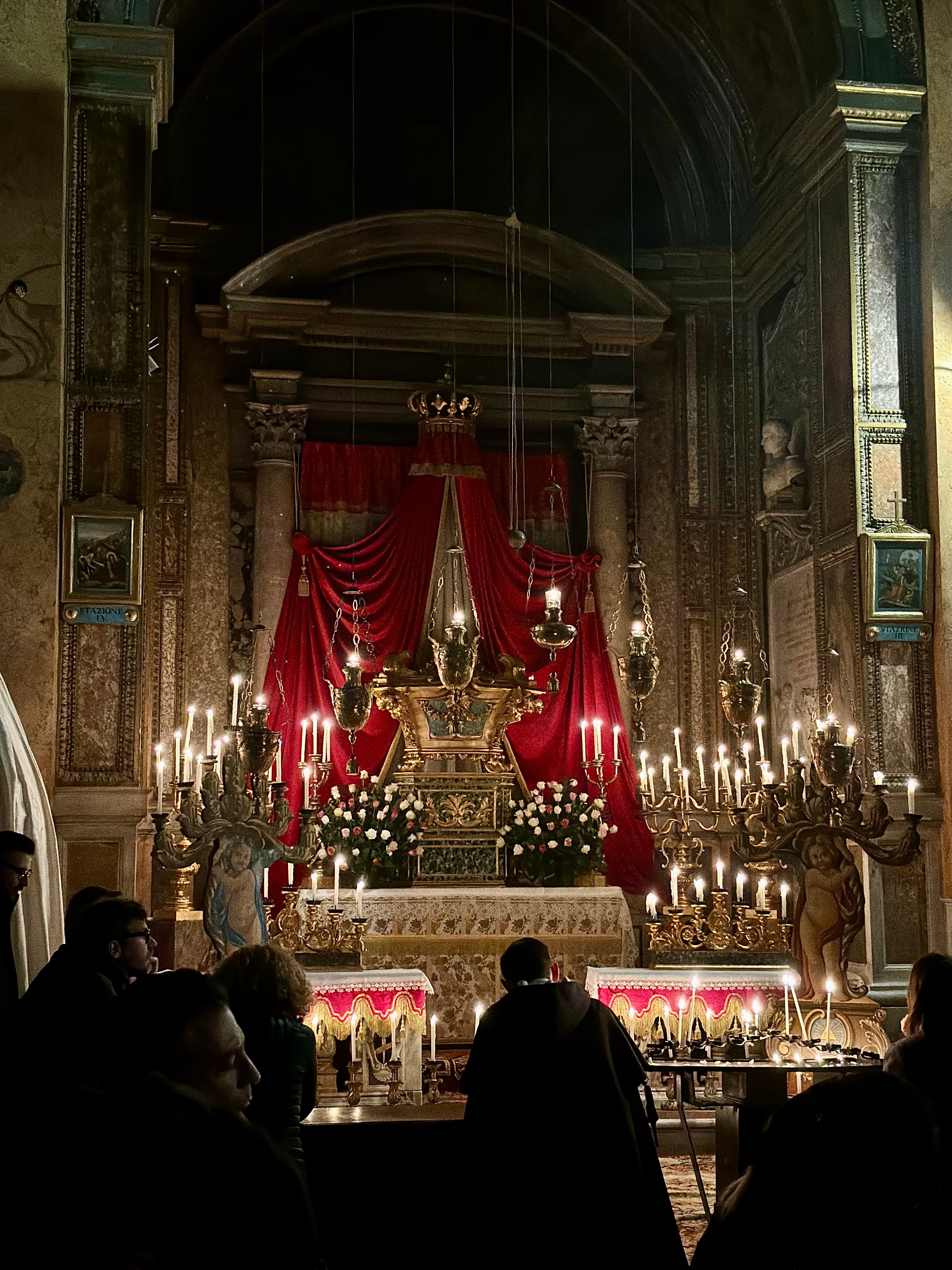
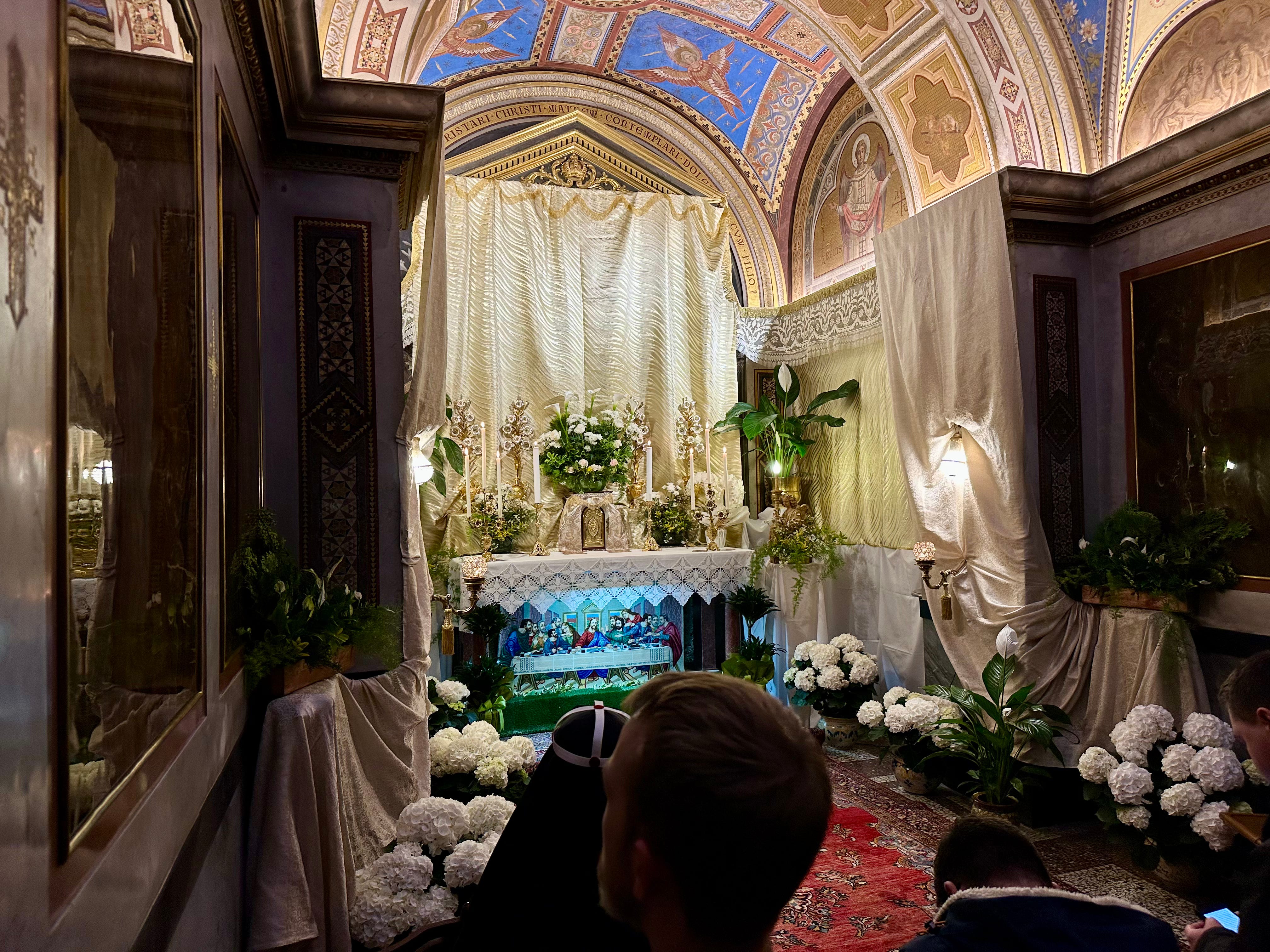
Interspersed with some of Dom Prosper Gueranger’s commentary for Maundy Thursday evening reproduced below are a series of images taken during the seven churches visitation made by Per Mariam during the Triduum in Rome last year.
Commentary by Dom Gueranger on Maundy Thursday evening
Judas has left the cenacle, and, profiting by the darkness, has reached the place where the enemies of his Savior are assembled. Jesus then turns to His faithful apostles, and says to them: “Now is the Son of Man glorified.” Yes, His Passion is to be followed by triumph and glory; and the Passion has already begun, for Judas has commenced his work of betraying Him.
Meanwhile, the apostles, forgetting the trouble into which they had been thrown by Jesus’ telling them that one of the twelve was about to betray Him, begin to dispute among themselves, which of them should seem to be greater. They have not forgotten the words spoken by Jesus to Peter, when He made him the rock on which He would build His Church; and here at the supper, they have seen the divine Master wash the feet of Peter first. On the other hand, John’s affectionate familiarity with Jesus, during this same supper, has made some of them argue that he who was most loved would be most honoured.
Jesus puts an end to this dispute, by giving to these future pastors of His Church a lesson of humility. There shall, it is true, be a head among them, but, says our Redeemer, “let him that is the greater among you, become as the younger; and he that is the leader, as he that serveth.” He bids them look at Him: He is their Master, and yet, says He, “I am in the midst of you, as he that serveth.”
Then turning towards Peter, thus addresses him: “Simon, Simon! behold Satan hath desired to have you, that he may sift you as wheat. But I have prayed for thee, that thy faith fail not: and thou, being once converted, confirm thy brethren.” This last interview is, as it were, our Savior’s testament; He provides for His Church, before leaving her. The apostles are to be Peter’s brethren, but Peter is to be their head. This sublime dignity is to be enhanced by the humility of him that enjoys it: he shall be “the servant of the servants of God.” The apostolic college is to be exposed to the fury of hell; but Peter alone is to confirm his brethren in the faith. His teaching shall ever be conformable to divine truth; it shall ever be infallible: Jesus has prayed that it may be so. Such a prayer is all-powerful; and thereby, the Church, ever docile to the voice of Peter, shall forever maintain the doctrine of Christ.
Jesus, after having provided for the future of His Church by the words He addressed to Peter, thus speaks affectionately to all the eleven: “Little children! yet a little while I am with you. Love one another. By this shall all men know that ye are my disciples, if ye have love one for another.” Peter says to him: “Lord! whither goest Thou?” “Whither I go,” answers Jesus, “thou canst not now follow Me; but thou shalt follow hereafter.” “Why cannot I follow thee now?” again asks Peter: “I will lay down my life for Thee.” “Wilt thou,” replies Jesus, “lay down thy life for Me? Amen, amen, I say to thee: the cock shall not crow, till thou deny Me thrice.”
Peter’s love for Jesus had too much of the human about it, for it was not based on humility. Presumption comes from pride: it almost always results in a fall. In order to prepare Peter for his future ministry of pardon, as also to give us a useful lesson, God permits that he, who was soon to be made prince of the apostles, should fall into a most grievous and humiliating sin.
But let us return to the instructions contained in the last words spoken by our Jesus before He leaves His disciples:
“I am the way, the truth, and the life. If you love Me, keep My commandments. I will ask the Father, and He shall give you another Paraclete, that He may abide with you forever. I will not leave you orphans; I will come to you. Peace I leave with you, My peace I give unto you: not as the world giveth, do I give unto you. Let not your heart be troubled, nor let it be afraid. If you loved Me, you would indeed be glad, because I go to the Father. I will not now speak many things with you, for the prince of this world cometh, and in Me he hath not anything. But that the world may know that I love the Father, and as the Father hath given Me commandment, so do I: arise, let us go hence.”
Deeply impressed by these words, the disciples arise, and, after the hymn of thanksgiving has been said, they accompany Jesus to Mount Olivet.
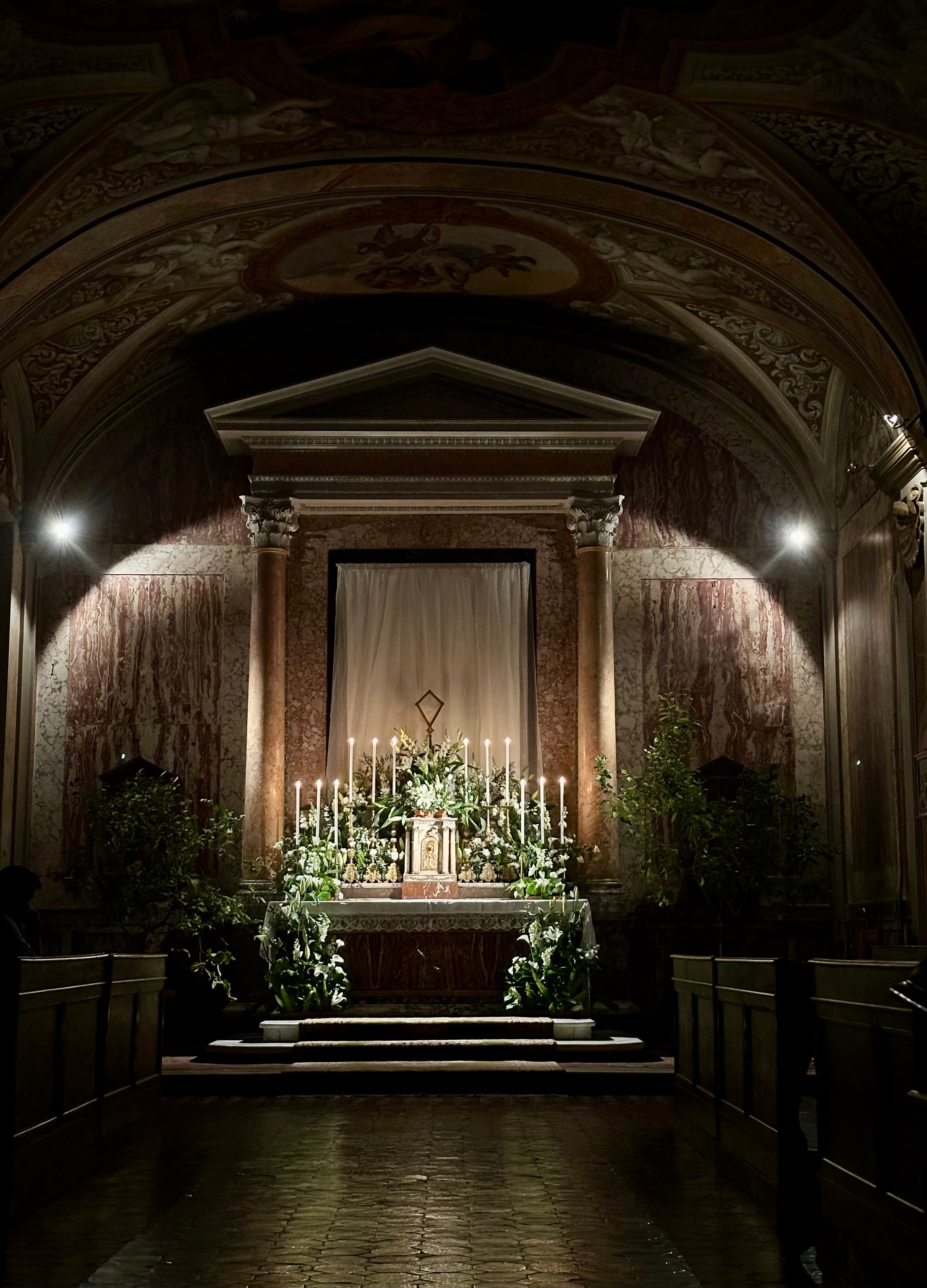
He continues His instructions as they go along. He takes occasion from their passing by a vine to speak of the effect produced by divine grace, in the soul of man.
“I am the true vine,” He says, “and my Father is the husbandman. Every branch in Me, that beareth not fruit, He will take away, and every one that beareth fruit, He will purge it, that it may bring forth more fruit. Abide in Me, and I in you. As the branch cannot bear fruit of itself, unless it abide in the vine; so neither can you, unless you abide in Me. I am the vine, you are the branches: he that abideth in Me, and I in him, the same beareth much fruit: for without Me you can do nothing. If any one abideth not in Me, he shall be cast forth as a branch, and shall wither, and they shall gather him up, and cast him into the fire, and he burneth. You have not chosen Me: but I have chosen you, and have appointed you, that you should go, and should bring forth fruit, and your fruit should remain.”
He next speaks to them of the persecutions that await them, and of the hatred the world will have of them. He renews the promise He had made them of the holy Spirit, the Comforter, and tells them that it is to their advantage that He Himself should leave them. He assures them that they shall obtain whatever they ask of the Father in His name. “The Father,” He adds, “loveth you, because you have loved me, and have believed that I came from God. I come forth from the Father, and am come into the world; again I leave the world, and I go to the Father.”
The disciples say to Him: “Now we know that Thou knowest all things, and Thou needest not that any man should ask Thee. By this we believe that Thou camest forth from God”. “Do you now believe?” answers Jesus: “Behold! the hour cometh, and it is now come, that you shall be scattered every man to his own, and shall leave Me alone. All you shall be scandalized in Me this night; for it is written: ‘I will strike the shepherd, and the sheep of the flock shall be dispersed.’ But after I shall be risen again, I will go before you into Galilee.”
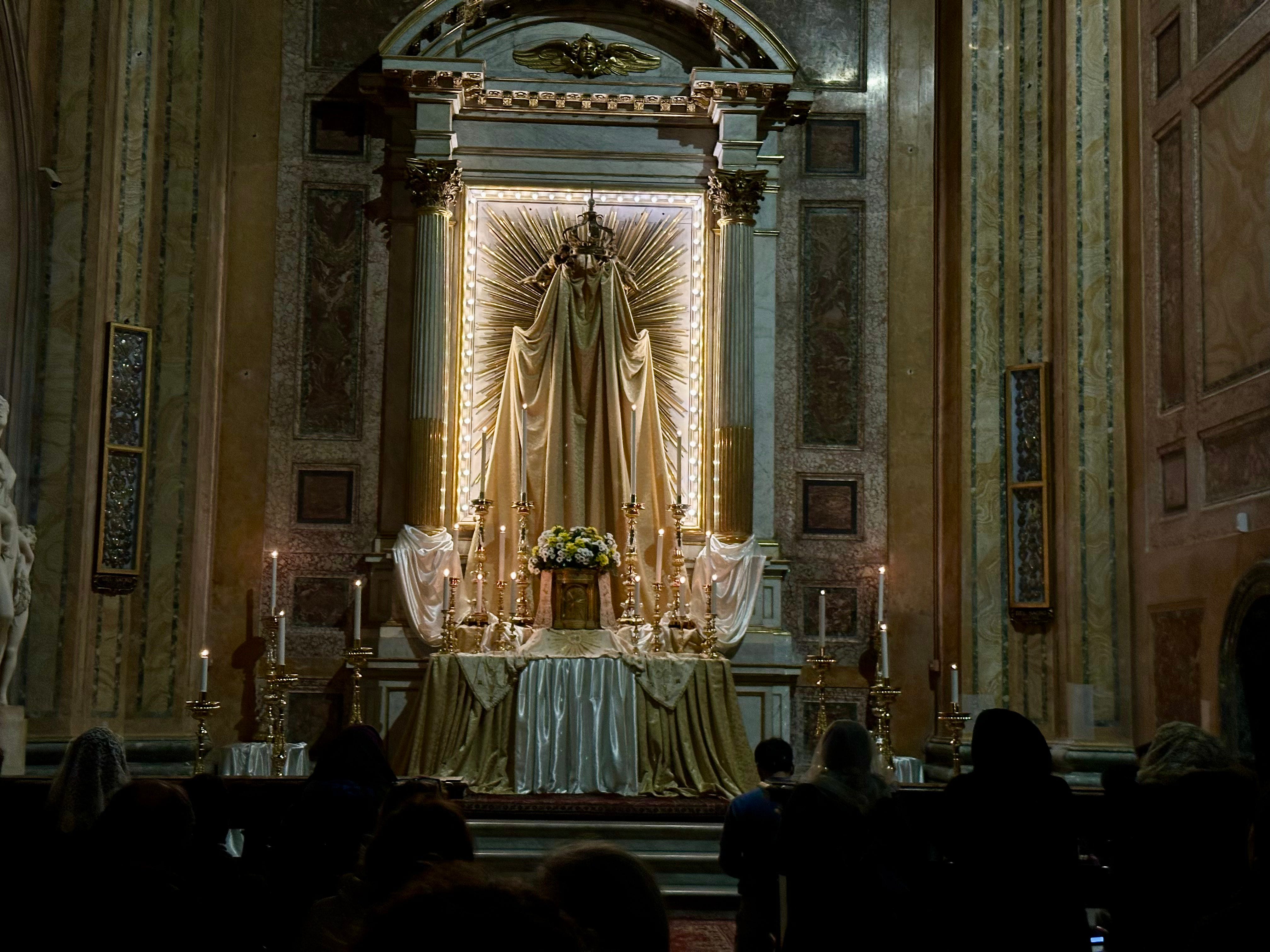
Peter again protests that he will be faithful to his Master; the rest may abandon Him, if they will, but he will keep with Him to the last! It should, indeed, be so, for he has received so much more from Jesus than the others have: but he is again humbled by being told of his coming speedy fall. Jesus then calmly raising up his eyes to heaven, says:
“Father! the hour is come; glorify Thy Son, that Thy Son may glorify Thee. I have finished the work which Thou gavest Me to do; I have manifested Thy name to the men whom Thou hast given Me. They have known that I came out from Thee, and they have believed that Thou didst send Me. I pray for them; I pray not for the world. And now I am not in the world, and these are in the world, and I come to Thee. Holy Father! keep them in Thy name, whom Thou hast given Me; that they may be one, as We also are. While I was with them, I kept them in Thy name. Those whom Thou gavest Me, have I kept; and none of them is lost, but the son of perdition, that the Scripture may be fulfilled. I have given them Thy word; and the world hath hated them, because they are not of the world, as I also am not of the world. I pray not that Thou shouldst take them out of the world, but that Thou shouldst keep them from evil. Not for them only do I pray, but for them also who, through their word, shall believe in Me: that they all may be one, as Thou, Father in Me, and I in Thee: that they also may be one in Us: that the world may know that Thou hast sent Me. Father, I will that where I am, they also, whom Thou hast given Me, may be with Me; that they may see the glory which Thou hast given Me, because Thou hast loved Me before the creation of the world. Just Father! the world hath not known Thee; but I have known Thee, and these have known that Thou hast sent Me. And I have made known Thy name to them, and will make it known, that the love, wherewith Thou hast loved Me, may be in them, and I in them.”
Such are the outpourings of the loving Heart of our Jesus, as He crosses the brook of Cedron, and ascends, with His disciples the Mount of Olives. Having come as far as Gethsemani, He goes into a garden, whither He had often led His apostles and rested there with them. Suddenly, His Soul is overpowered with grief; His human Nature experiences, as it were, a suspension of that beatitude which results from its union with the Divinity. This His Humanity will be interiorly supported even to the very last moment of His Passion; but it must bear everything that it is possible for it to bear.
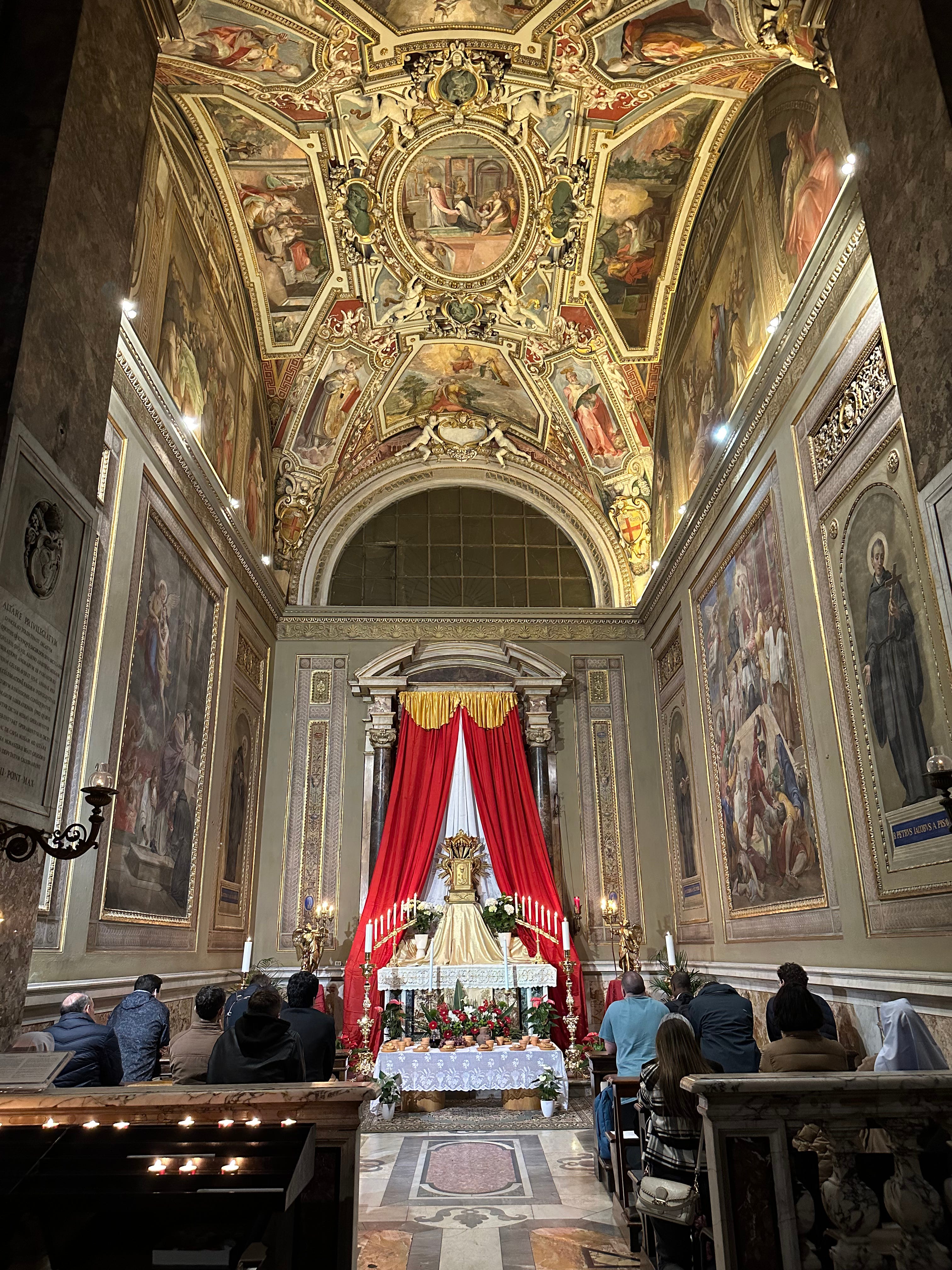
Jesus feels such intense sadness, that the very presence of His disciples is insupportable; He leaves them, taking with Him only Peter, James, and John, who, a short time before, had been witnesses of His glorious Transfiguration: will they show greater courage than the rest, when they see their divine Master in the hands of His enemies? His words show them what a sudden change has come over Him. He whose language was, a few moments before, so calm, His look so serene, and His tone of voice so sweet, now says to them: “My soul is sorrowful even unto death: stay you here, and watch with Me.”
He leaves them, and goes to a grotto, which is about a stone’s throw distant. Even to this day it exists, perpetuating the memory of this terrible event. There does our Jesus prostrate Himself and pray saying: “Father! all things are possible to Thee. Remove this chalice from Me: but not what I will, but what Thou wilt.”
While He is thus praying, a sweat of Blood flows from His Body and bathes the ground. It is not merely a swooning, it is an agony, that he suffers. God sends help to His sinking frame, and it is an angel that is entrusted with the office. Jesus is treated as man; His Humanity, exhausted as it is, is to receive no other sensible aid than that which is now brought Him by an angel (whom tradition affirms to have been Gabriel). Hereupon He rises, and again accepts the chalice prepared for Him. But what a chalice! Every pain that body and soul can suffer; the sins of the whole world taken upon Himself, and crying out vengeance against Him; the ingratitude of men, many of whom will make His sacrifice useless: Jesus has to accept all this, and at the very time when He seems to be left to His human Nature. The power of the Divinity, which is in Him, supports Him: but it does not prevent Him from feeling every suffering, just as though He had been mere Man. He begins His prayer by asking that the chalice may be taken from Him: He ends it by saying to His Father: “Not My will, but Thine be done!”
Jesus then rises, leaving the earth covered with the Blood of His agony: it is the first blood shedding of His Passion. He goes to His three disciples, and, finding them asleep, says to them: “What! could you not watch one hour with Me?” This is the beginning of that feature of His sufferings which consists in His being abandoned. He twice returns to the grotto, and repeats His sorrowful, but submissive, prayer; twice He returns to His disciples, whom He had asked to watch near Him, but at each time finds them asleep.
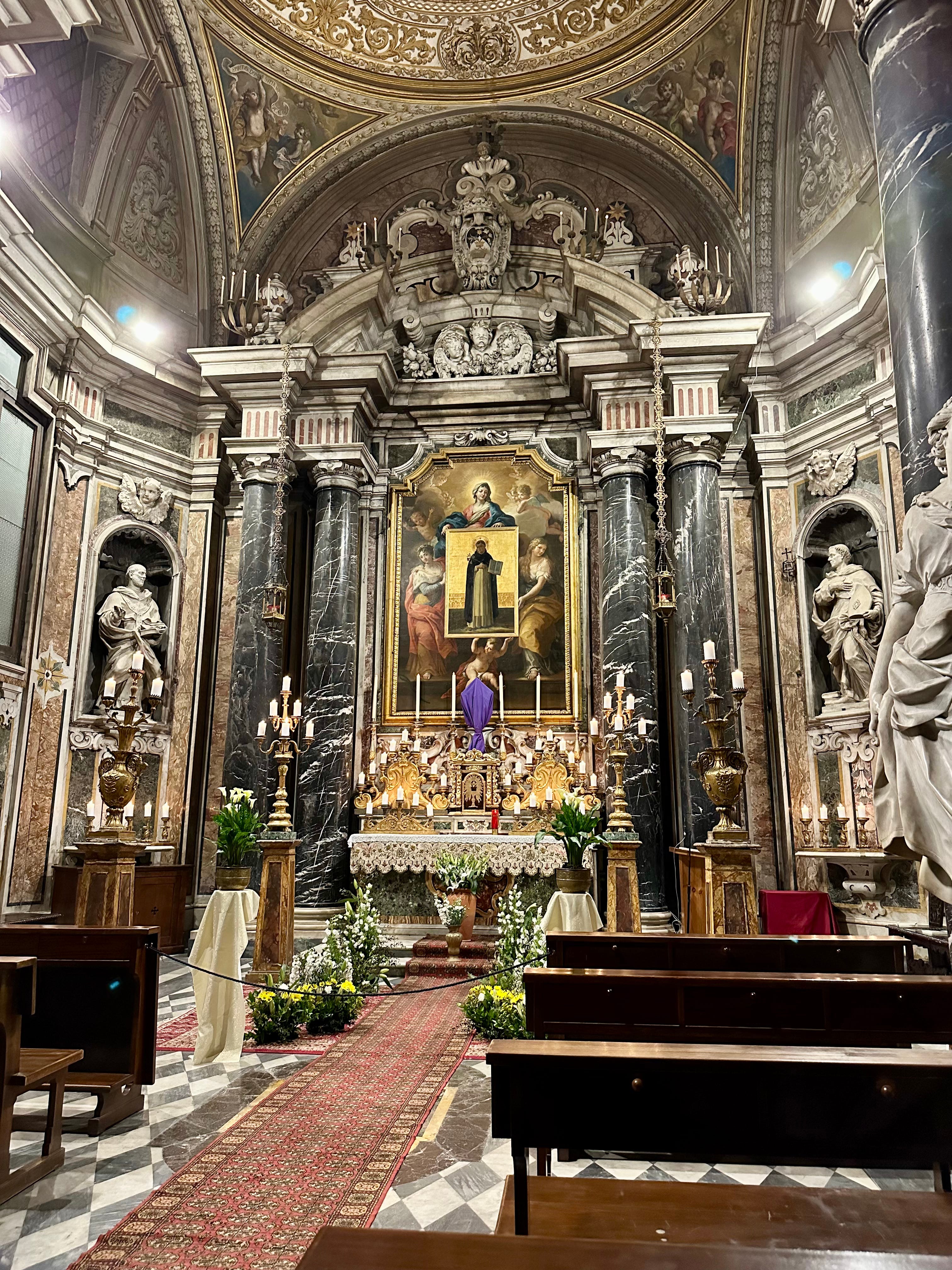
At length, He speaks to them saying: “Sleep ye now, and take your rest! Behold, the hour is at hand, and the Son of Man shall be betrayed into the hands of sinners.” Then resuming the energy of His divine courage, He adds: “Rise! let us go! Behold, he is at hand that will betray Me.”
While He is speaking these last few words, a numerous body of armed men enter the garden with torches in their hands. Judas is at their head. The betrayal is made by a profanation of the sign of friendship. “Judas! dost thou betray the Son of Man with a kiss?”
These piercing words should have made the traitor throw himself at his Master’s feet, and ask pardon; but it was too late: he feared the soldiers. But the servants of the high priest cannot lay hands on Jesus, unless He, their Victim, permit them to do so. With a single word, He casts them prostrate on the ground. Then permitting them to rise, He says to them with all the majesty of a King: “If you seek Me, let these go their way. You are come out, as it were against a thief with swords and clubs. When I was daily with you in the temple, you did not stretch forth your hands against Me: but this is your hour, and the power of darkness.”
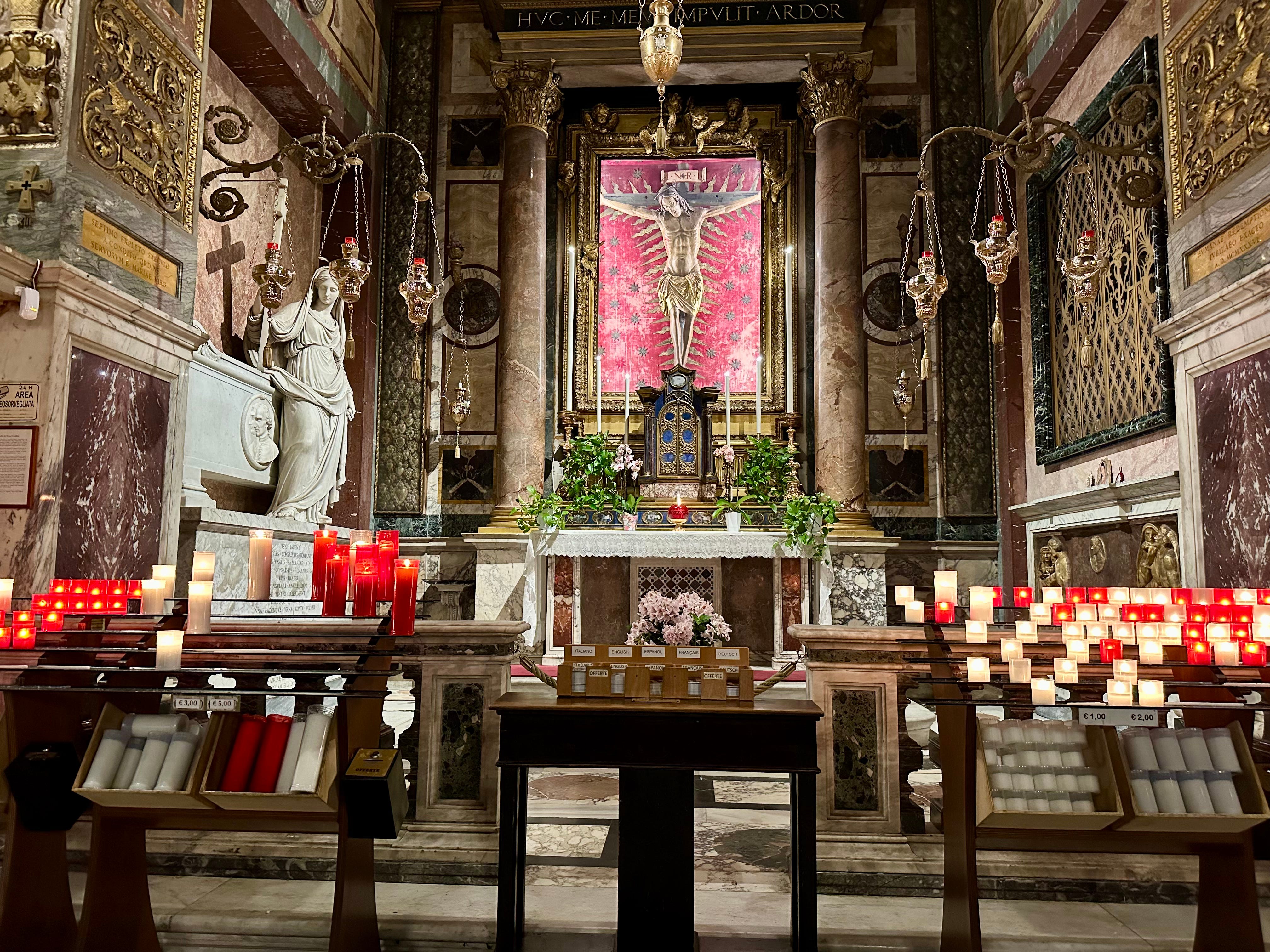
Then turning to Peter, who has drawn and used his sword, He says to him: “Thinkest thou that I cannot ask My Father, and He will give Me presently twelve legions of angels? How then shall the Scriptures be fulfilled?”
And now, Jesus permits Himself to be led. Whereupon, His apostles run away in fear. Peter and another disciple follow Him, but as far off as they can. The soldiers lead Jesus by the same road, along which He had passed on the previous Sunday, when the people met Him with palm and olive branches in their hands. They cross the brook Cedron; and there is a tradition of the Church of Jerusalem that the soldiers, as they passed the bridge, threw Jesus into the water. Thus was fulfilled the prophecy of David: He shall drink of the torrent in the way.
They reach the City walls. The gate is opened, and the divine Prisoner enters. It is night, and the inhabitants know not the crime that has been committed. It is only on the morrow, that they will learn, that Jesus of Nazareth, the great Prophet, has fallen into the hands of the Chief Priests and Pharisees. The night is far advanced; but many hours must elapse before the dawn of day. The enemies of Jesus have arranged to take him, in the morning, to Pontius Pilate, and accuse him as being a disturber of the peace: but in the meanwhile, they intend to condemn him as guilty in matters of religion I Their tribunal has authority to judge in cases of this nature, only they cannot pass sentence of death upon a culprit, how guilty soever they may prove him. They, consequently, hurry Jesus to Annas, the father in-law of the High Priest Caiphas. Here is to take place the first examination. These blood-thirsty men have spent these hours in sleepless anxiety. They have counted the very minutes since the departure of their minions for Mount Olivet. They’re not without some doubt as to whether their plot will succeed. At last, their Victim is brought before them, and he shall not escape their vengeance!
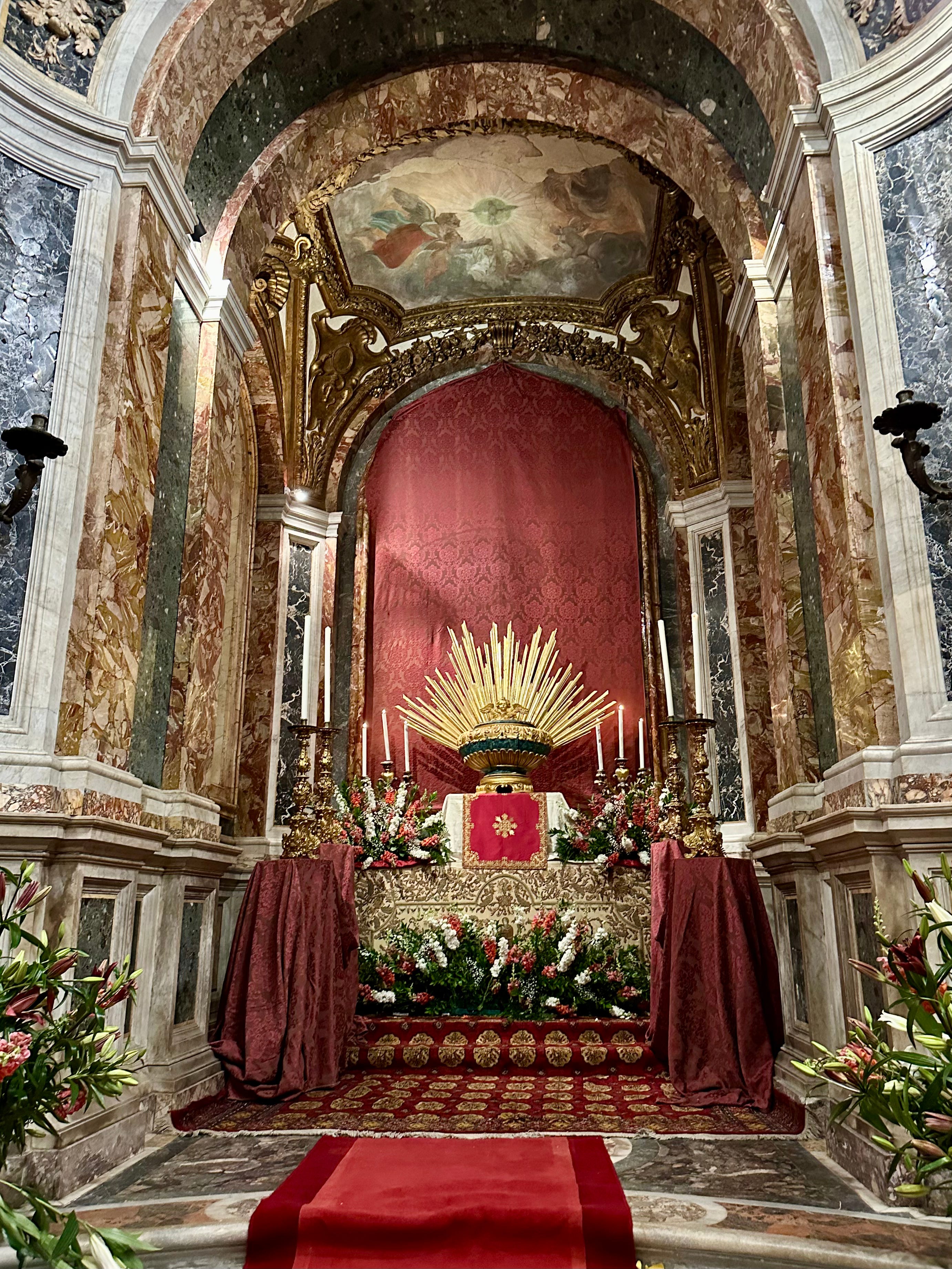
Here let us interrupt our History of the Passion, till the morrow shall bring us to the solemn hour, when the great Mystery of our instruction and salvation was accomplished. What a day is this that we have been spending! How full of Jesus’ love! He has given us his Body and Blood to be our Food; he has instituted the Priesthood of the New Testament; he has poured out upon the world the sublimest instructions of his loving Heart.
We have seen him struggling with the feelings of human weakness, as he beheld the Chalice of the Passion that was prepared for him; but he triumphed over all, in order to save us. We have seen him betrayed, fettered, and led captive into the holy City, there to consummate his Sacrifice.
Let us adore and love this Jesus, who might have saved us by one and the least of all these humiliations; but whose love for us was not satisfied unless he drank, to the very dregs, the Chalice he had accepted from his Father.