

Head of Spanish bishops rejects spirit of Amoris Laetitia days before Pope's visit
Archbishop Luis Argüello outlined certain instances in which reception of Holy Communion were not to take place.

VATICAN CITY (PerMariam) — The head of the Spanish Bishops’ Conference has de facto rejected the substance of Pope Francis’ Amoris Laetitia, writing that Holy Communion is not permitted for married people now living in new relationships.
Issuing a pastoral letter on June 1, to mark the upcoming feast of Corpus Christi, Archbishop Luis Argüello outlined certain instances in which reception of Holy Communion were not to take place.
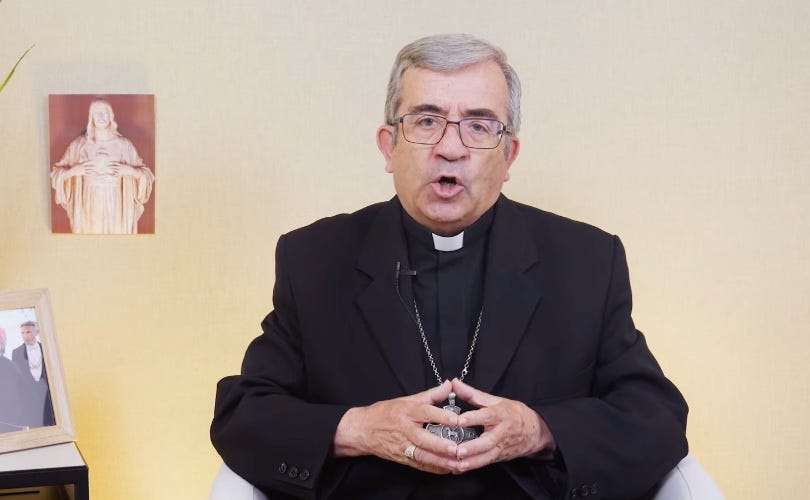
The Spanish prelate’s letter comes by way of a rare intervention into the issue of who should receive Holy Communion. Not that the Church is unclear on this, but more that Her traditional teaching is often ignored. Argüello wrote:
“If our situation or state of life is incompatible with full communion with the Lord and His Church — whether because we are involved in a sinful relationship, in abuses against others — whether in the economic or workplace sphere, or in the psychological or emotional sphere — or by publicly defending positions contrary to Christian morality, we cannot approach Communion without a firm decision to change our lives and make amends for the harm caused by our sinful situation.”
Continuing, Argüello appeared to reiterate the Catholic teaching regarding the impossibility of receiving Holy Communion for those who have ‘re-married,’ writing against individuals in such arrangements from approaching the altar:
“Nor is it possible when a marital relationship has broken down and those who were part of that marriage are living in a new conjugal relationship.”
“These people,” added the Archbishop of Valladolid, “who continue to be part of the Church, must know that this breach of the Sacrament of the Covenant prevents Eucharistic communion; they may participate in the celebration, as well as in the life of the Church in many ways, but receiving Holy Communion is not possible.”
The Church’s Canon Law outlines clearly that anyone “conscious of grave sin is not to celebrate Mass or receive the body of the Lord without previous sacramental confession unless there is a grave reason and there is no opportunity to confess; in this case the person is to remember the obligation to make an act of perfect contrition which includes the resolution of confessing as soon as possible.”
This is because, as the same Canon Law teaches, the Eucharist is the “source and summit” of the Catholic life.
Hence Catholics are not to approach Holy Communion as it they have a right to receive it regardless of the state of their soul. On the contrary, the Church teaches that Her faithful are “to hold the Most Holy Eucharist in highest honor, taking an active part in the celebration of the most august sacrifice, receiving this sacrament most devoutly and frequently, and worshiping it with the highest adoration.”
Referencing the spirit of this teaching, Argüello noted that – for the divorced and ‘re-married’ – the “pain of not receiving Communion must fuel the desire to seek a solution that respects the meaning of the two sacraments at stake: Marriage and the Eucharist.”
In order to safeguard the sacraments, he urged people to “prepare ourselves to celebrate the Eucharist, examine our consciences, and examine our way of life and state of life so that it is consistent with the full communion that comes with participating in the Eucharist by receiving the Body of the Lord.”
But what of 2016?
Argüello’s pastoral letter is in one sense, nothing noteworthy, given that it simply presents the Catholic teaching on the reception of Holy Communion.
However the focus on it is born from the fact that it appears to directly contradict the spirit of Amoris Laetitia, which proposed that the divorced and ‘re-married’ could receive Holy Communion. Add to that aspect the context that the letter comes from the president of the Spanish Bishops Conference with two years still left to serve and about to welcome a papal visit, and the letter takes on new significance.
In the brief lines of the infamous footnote 351 in Chapter 8 of the 2016 Apostolic Exhortation, Pope Francis argued for the “integration” of those in “irregular unions” into the life of the Church. In the footnote, he stated that this “integration” can, “in certain cases,” involve admittance to the sacraments, including the Eucharist.
Fielding questions on the text, he later answered by saying there is “no other interpretation” of Amoris Laetitia except the one provided by the bishops of Buenos Aires allowing Communion for the divorced and remarried. The Pope was also asked during an in-flight press conference if the text contained a “change in discipline that governs access to the sacraments” for Catholics who are divorced and “re-married,” Francis replied, “I can say yes, period.”
It sparked easily one of the greatest controversies of Francis’ pontificate. Within months, a group of Catholic scholars wrote to all the cardinals and patriarchs, warning that Amoris Laetitia contained “dangers to the faith” and appealing for a correction.
On November 14, 2016 four cardinals publicly released the Dubia which they had privately sent to the Pope on September 19, but which had gone unanswered. The four signatories – Cardinals Walter Brandmüller, Raymond Burke, Carlo Caffarra, and Joachim Meisner – issued the Dubia only ten days after Francis’ comments to the Buenos Aires bishops: an interpretation of Amoris Laetitia which Brandmüller had previously warned would be heretical. No answer was received.
However, responding to a different Dubia from Cardinal Dominik Duka O.P. on the same issue in 2023, the Vatican implicitly provided an answer to the 2016 Dubia.
Duka asked whether Pope Francis’ response to the Bishops of Buenos Aires could be considered “a statement of the ordinary Magisterium of the Church.” Cardinal Victor Manuel Fernández wrote that since Pope Francis’ words were published in the Vatican’s official compilation of documents, the Acta Apostolicae Sedes, they were “authentic Magisterium.”
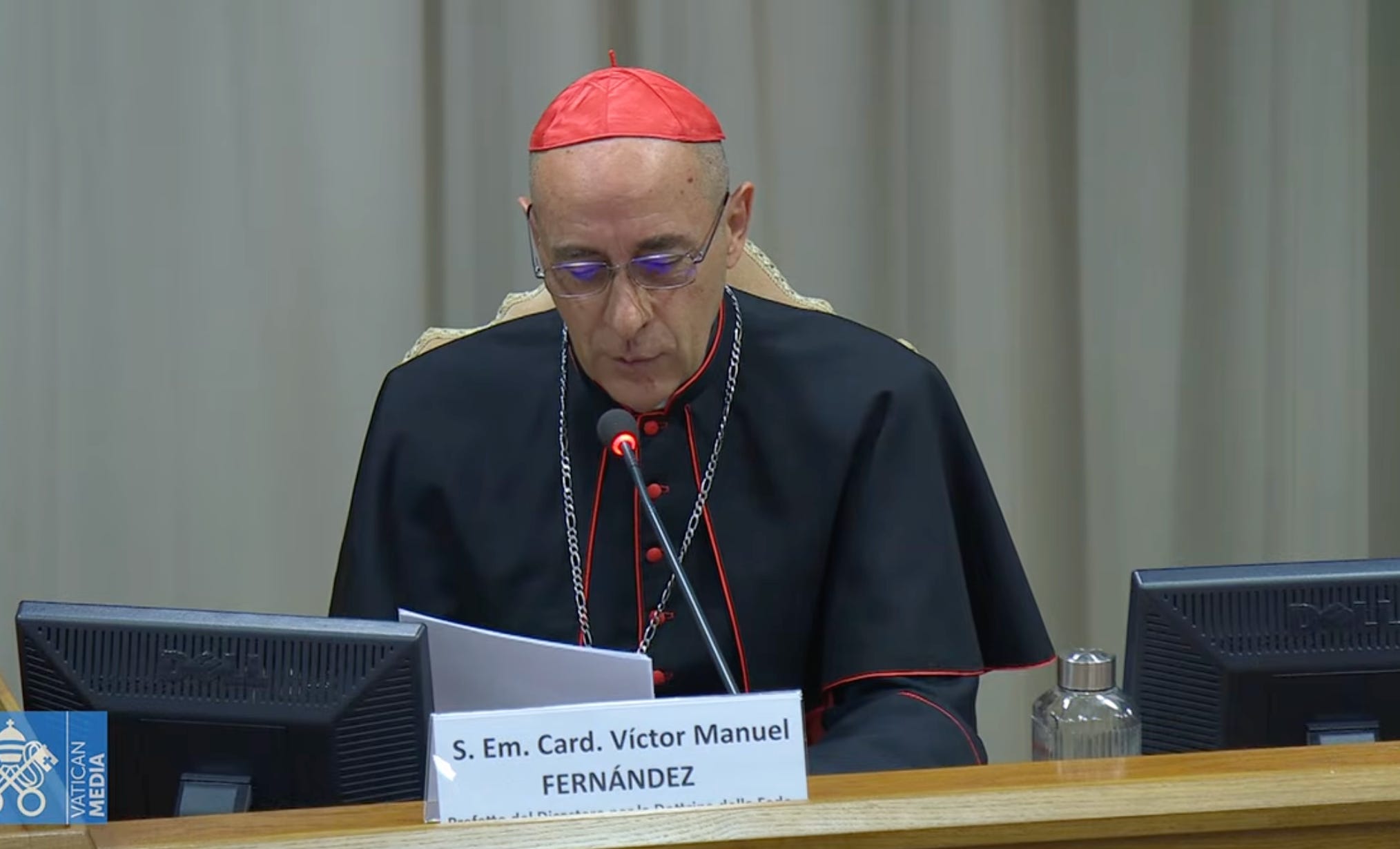
It will be a revealing tell of Leo XIV’s style if Argüello is reprimanded by the Vatican, or if his statement remains unchallenged.
However, Leo has convened a special meeting of the presidents of bishops conferences for this October to examine Amoris Laetitia at its ten year anniversary.
The meeting will be, he explained, “an effort to proceed, in mutual listening, to a synodal discernment on the steps to be taken in order to proclaim the Gospel to families today, in light of Amoris Laetitia and taking into account what is currently being done in the local Churches.”

Much consternation has arisen from some, believing that Leo intends to further cement Amoris Laetitia into the Church’s teaching. However, as noted by this correspondent, subtle clues given by the American pontiff suggest that he may in fact do just the opposite.