
EXCLUSIVE: Cardinal Burke on the Consistory and SSPX consecrations
The prominent American cardinal noted his highlights and concerns about the consistory, while also commenting on the SSPX and the "state of emergency."

VATICAN CITY (PerMariam) — Cardinal Raymond Burke has given his assessment of the recent Extraordinary Consistory along with the upcoming episcopal consecrations of the Society of Saint Pius X, noting some remaining concerns about the consistory format, while lamenting the planed consecrations.
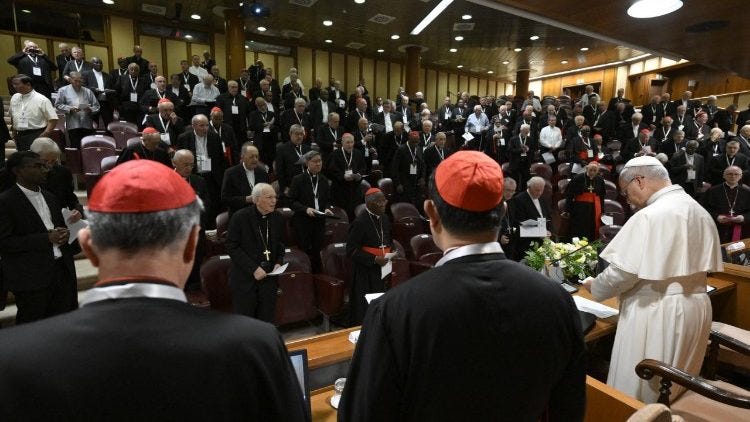
Speaking with Per Mariam following the recent consistory, Cdl. Burke offered a summary of the event which drew just under 180 cardinals to Rome for the second such meeting of Leo XIV’s pontificate. As many have similarly done, Burke welcomed the return of consistory’s to the Vatican’s regular life, since it offers a chance to “discuss important questions with regard to the Church.”
But he also raised his concerns about the small table “synodal” group method which has largely replaced the traditional open discussion. As for synodality itself, on which the cardinals were briefed during Saturday’s meeting, the American prelate said that it “remains unresolved.”
“There really needs to be a critical examination of what is meant by this or whether it is an appropriate way to carry out consultation in the Church,” he said about the synodal style. {See full coverage about the consistory from this correspondent here: for day one, and day two.}
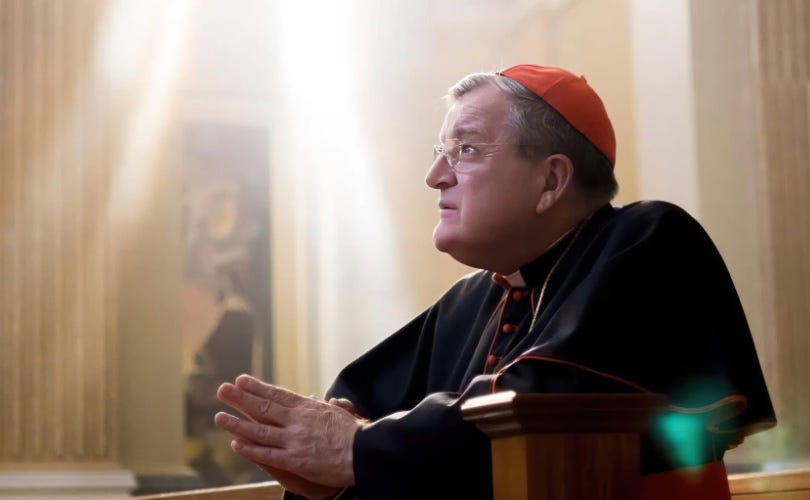
Burke – the former prefect of the Supreme Tribunal of the Apostolic Signatura – also expressed his strong concern about the planned episcopal consecrations being held on July 1 by the Society of St. Pius X (SSPX). {See Per Mariam’s archive on the topic here}
He downplayed the Society’s argument that a state of emergency exists, saying that “the present situation does not constitute a state of emergency because in fact the idea behind that {state of emergency argument} is that the faithful who are in the SSPX can’t live their Catholic faith in the Church without having a church within the Church.”
The cardinal spoke of his hope that the Holy See would designate some cardinals to meet with the SSPX, perhaps leading to more fruitful negotiations than those conducted by Cardinal Victor Manuel Fernández on behalf of the Holy See.
He also waved aside the likelihood of the Holy See declaring all the SSPX faithful to be excommunicated. This suggestion, found in some online rumours, was unlikely, said Burke, since “I believe there are many faithful who are members of the SSPX, including also priests who don’t have this schismatic spirit: they just love the tradition of the more ancient usage of the Roman Missal.”
The full interview is found below.
Cardinal Burke on the Extraordinary Consistory of June 2026
Michael Haynes: We just saw the second Consistory of the year and of the papacy. What were your main takeaways, main highlights or main concerns from it?
Cardinal Raymond Burke: Well, first of all I’m pleased that we had this second meeting this year because the first one in January was rather brief. The cardinals being together, it gives us an occasion to get to know one another and to discuss important questions with regard to the Church.
Both in January and with this meeting they’ve implemented what’s called the synodal form of consistory, and I have to confess that I’m not completely convinced of it. The classical format of the consistory was an open debate in which all the cardinals were present and heard whoever was speaking and could respond.
So that part I’m hoping can be addressed, but the fact that the Consistory took place and that the Pope put such a high priority on it, I take to be very positive.
But I think that the whole question of synodality remains unresolved. It’s not clear what it means and it certainly has no history in the life of the Church. There really needs to be a critical examination of what is meant by this or whether it is an appropriate way to carry out consultation in the Church.
Haynes: I was quite surprised by the return of that format because I remember after the January consistory a number of Cardinals did express concern about the format. But the Pope in his opening address, said that this was going to be the way forward it seems.
Cdl. Burke: Yes, he’s rather insisting on it, but I think at the same time those of us who have critical concerns need to express that to him.
Haynes: Which brings up one of the interesting aspects about the consistory, because normally an extraordinary consistory is called for addressing a particular concern in the Church, but it seems, a lot of the main crises within the Church were absent from the official programme.
Cdl. Burke: Yes, the programme was practically – except for the last session on synodality – almost exclusively addressing the world’s concerns, looking at where people are feeling isolated or lost, and so that that was really the main thrust of the consistory. Some cardinals raised the point, for instance, about the crisis of the Priestly Society of Saint Pius X, as it seems to them very strange that we cardinals wouldn’t have discussed that.
Haynes: Do you think the Pope is using the consistory for the cardinals to get to know each other while he handles those more polemical, for lack of a better word, issues?
Cdl. Burke: That’s what seemed to be the case, that he wants the consistory just to be a time for the cardinals to discuss certain things. The agenda was certainly very broad in terms of concerns about the world, about the state of society. But he didn’t ask our consultation on that issue {SSPX}.
Haynes: One issue which struck me when I was reading through the summaries was that when the discussion is so broad, it’s very easy to produce a statement like “we need to work for more peace,” but in terms of actually putting something into practical effect, there’s quite a gap between the two. It’s good for the Cardinals to meet, but there’s the risk that no real discernible effect is then seen for the rest of the Church.
Cdl. Burke: I would agree with you. When we cardinals are meeting and talking about something then we should arrive at some pastoral action, some better way of caring for souls, and that isn’t always evident.
Interview continues below — —
Cardinal Burke on the episcopal consecrations of the Society of St. Pius X
Haynes: In terms of the question of the SSPX, it was noted by a number of people that it was off the official consistory programme. Do you think the Holy See is able to make some last-minute intervention with the Society or does it look, do you think, that there’ll be the consecrations and then an excommunication?
Cdl. Burke: Well, I’m not involved at all in the question from the point of view of the Holy See. But especially from the comments that the Holy Father has made to the press, I don’t get the impression that there’s going to be any, so to speak, last minute outreach to them. It seems to me, at least the way I understand it, that the approach is to let them go ahead and do this. Ordaining bishops without a papal mandate will incur a latae sententiae excommunication, and that will have to be published by the Holy See.
I’m still hoping that the Holy See would designate a cardinal or two, or even three cardinals, to meet with any members of the Priestly Society of St. Pius X. For many of them this is very troubling too because they see it as a schismatic act, but they could be reconciled and that’s what we have to work for.
Haynes: In terms of your expertise on the canonical question, would it be an excommunication for the consecrating bishops and the ones receiving the order?
Cdl. Burke: That’s clear – anybody who actively, knowingly, and willingly cooperated with the act. There was a rumour in the press that the Holy See might declare all members of the SSPX excommunicated. I don’t think that can be sustained because I believe there are many faithful who are members of the SSPX, including also priests who don’t have this schismatic spirit: they just love the tradition of the more ancient usage of the Roman Missal.
For instance, there is the recent study done by Dr. Stephen Bullivant and Dr. Stephen Cranney which shows that the traditional Latin Mass Catholics, for the most part, do not question the validity of the Second Vatican Council.
Haynes: With regards to the state of emergency which is cited, in terms of the canonical aspect how would you respond to that? Some commentators question who has the authority to declare a state of emergency. Do you see a basis in Canonical Law for bishops, such as those in the Society, to do so?
Cdl. Burke: Certainly the present situation does not constitute a state of emergency because in fact the idea behind that {state of emergency argument} is that the faithful who are in the SSPX can’t live their Catholic faith in the Church without having a church within the Church.
But the dogmatic truth is that Our Lord has promised to remain with us in the Church until the last day. He is with us in the Church and we stay with Him in the Church. Even if there are serious difficulties in the Church, and surely there are, we stay by our Lord and we fight and do our part to be faithful. The rest is in the hands of God. No situation justifies doing something that is intrinsically evil.