

EXCLUSIVE: Cardinal Burke – Atheistic promotion of anti-life policies leads to ‘self-destruction’ of nations
Cardinal Burke spoke about the current attacks on the sanctity of life seen in countries around the world, be it at the earliest or the latter stages in life.

VATICAN CITY (PerMariam) — Lamenting the widespread push for contraception, abortion and euthanasia, Cardinal Raymond Burke highlighted the link between this attack on the family and the detriments for the Church, whilst urging Catholics to be more active in the pro-life fields.
“Infanticide” and national “self-destruction” was how Cdl. Burke referred to the promotion of abortion recently. “The agents of abortion, the agents of euthanasia, they don’t tell you what the reality is,” he noted.
Speaking to Per Mariam in Rome in January, the American prelate opined on the current push for the varied attacks on the sanctity of life seen in countries around the world, be it at the earliest or the latter stages in life.
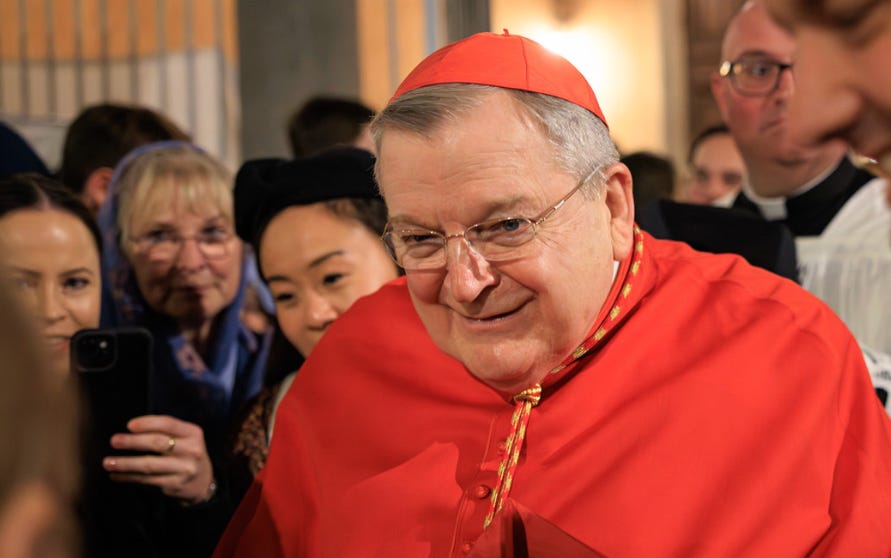
The interview was conducted in light of Pope Leo XIV’s address to diplomats, the State of the World Address, in which he condemned abortion, surrogacy and euthanasia in forthright terms. “The primary objective” in supporting women, said Leo, “must remain the protection of every unborn child and the effective and concrete support of every woman so that she is able to welcome life.”
Asked about what could do be done to support the pro-life cause on the diplomatic scene, Cdl. Burke urged that the Church “needs to do everything that it can to support and even found institutions in which medical care is given according to the moral law.”
This would happen practically by the Church pronouncing Her teachings clearly and unashamedly:
“The Church has first of all, to announce clearly her teaching and not in any way give the impression that She’s unsure about what should happen in these cases, but at the same time to support those members of the faithful who are trying to establish Catholic medical schools, truly Catholic hospitals in the sense of hospitals where the care is given according to the ethical and religious directives of the Church.”
In such a manner, Catholics can find a way of “combating the cultural trend,” he added, while warning against the temptation to despair of progress in the face of successful anti-life forces.
Recent years have seen some dampening on the ecclesial impetus to activism defending the sanctity of life, as an internal debate raged amongst sectors of the U.S. episcopate over whether abortion was the preeminent moral issue of the time. Leo XIV’s personal message to the 2026 March for Life in Washington D.C. certainly appears to have re-iterated the seriousness of abortion, and comes as a mark of subtle papal signalling about the response required.
Welcoming the Pope’s message – which differed to those sent on behalf of Pope Francis by the Secretary of State – Burke urged that American respond by engaging more directly and deeply with the anti-life activists, “because many people for whatever reason don’t think deeply about these matters.”
Referencing the debate over abortion’s seriousness, Burke also acknowledged that “there has been a confusion in the Church with regard to moral questions which pertain to human life.” Such issues relating to the sanctity of life have been equated with those of a lesser nature, such as “the environment and to immigration and other related issues, which are questions of prudential judgment.”
While certain differing opinions on “prudential” issues relating to such topics can be admitted, Burke stated that questions on the sanctity of life were not the same: “there is no debate with regard to abortion. It’s not a question of a prudential judgment. It’s a matter that is always and everywhere wrong.”
His comments come as the “Orwellian” mis-use of language – condemned by Pope Leo XIV – is being used to target Catholics and pro-lifer activists, including in once fabled democracies such as the U.S. and the U.K. England’s state-enforced buffer zones now make it illegal to pray within close proximity of abortion centers, while traditional Catholics were infamously surveyed by the F.B.I. in America just for their religious beliefs.
Responding to this anti-Catholic culture requires firm and unwavering stance by the Church, he opined. “The Church’s teaching has to be stated clearly by Her pastors and this is of course the primary responsibility of the Roman Pontiff and the bishops in communion with him, and then to find the means to communicate this.”
To this end the activity of clergy is key, but “principally” also is that of the laity, added Burke.
Failing to do so has a direct and deleterious effect on the Church and civil society since anti-life agendas are at their heart atheistic.
“So this is part of what Sister Lucia saw in the vision and the apparitions of Our Lady – this apostasy, this abandonment of Christ, abandonment of the Gospel, abandonment of the fundamental moral law that leads us then to rebel against God and leads to our self-destruction,” the cardinal warned.
Per Mariam’s full interview with Cardinal Burke can be seen on the video below, with the transcript underneath the video. {All rights reserved on the video - any unauthorized reproduction forbidden}
Michael Haynes: Your Eminence, you’re due to address a bioethics conference in a couple of weeks. So I wanted to take that opportunity to link into some of the Pope’s words on similar themes. In his State of the World address a couple of weeks ago, the Pope gave really some very forthright condemnations of abortion, euthanasia, and surrogacy. All of which are issues we’re seeing promoted in different countries around the world.
Given your experience as a diocesan bishop and then as a curial cardinal, what do you think the church could do either politically or diplomatically to further that cause of life – because it can sometimes seem like we’re on the back foot?
Cardinal Raymond Burke: Well, I think that the Church needs to do everything that it can to support and even found institutions in which medical care is given according to the moral law. And the conference I’m going to address has to do particularly with the question of euthanasia, which has been practiced in a quiet way in the United States for a long time.
When I was a new bishop, I remember attending a conference and many physicians came to me to say to me that elderly patients, if they’re sent to certain care facilities, die within a week because their lives are viewed as no longer productive and therefore they’re given exaggerated amounts of medication and so forth which lead to their death. We, of course, we’ve had notorious cases too in the United States and of course you had in England, where people are denied the fundamental nutrition and hydration and are basically starved to death because their lives are viewed as no longer meaningful or no longer productive, the different terminology that’s used in a very secular world.
So the Church has first of all, to announce clearly her teaching and not in any way give the impression that She’s unsure about what should happen in these cases, but at the same time to support those members of the faithful who are trying to establish Catholic medical schools, truly Catholic hospitals in the sense of hospitals where the care is given according to the ethical and religious directives of the Church.
And this is our way of combating the cultural trend. The temptation, Satan’s first temptation, is always to discouragement when people say, “oh, you’re just like Don Quixote, fighting useless battles.” But for us, we have no choice. Our mission is to to honor God also by defending human life, by defending the family. So we continue on knowing that no matter what the world thinks, that God will give His blessing to our efforts and will put things right in his time.
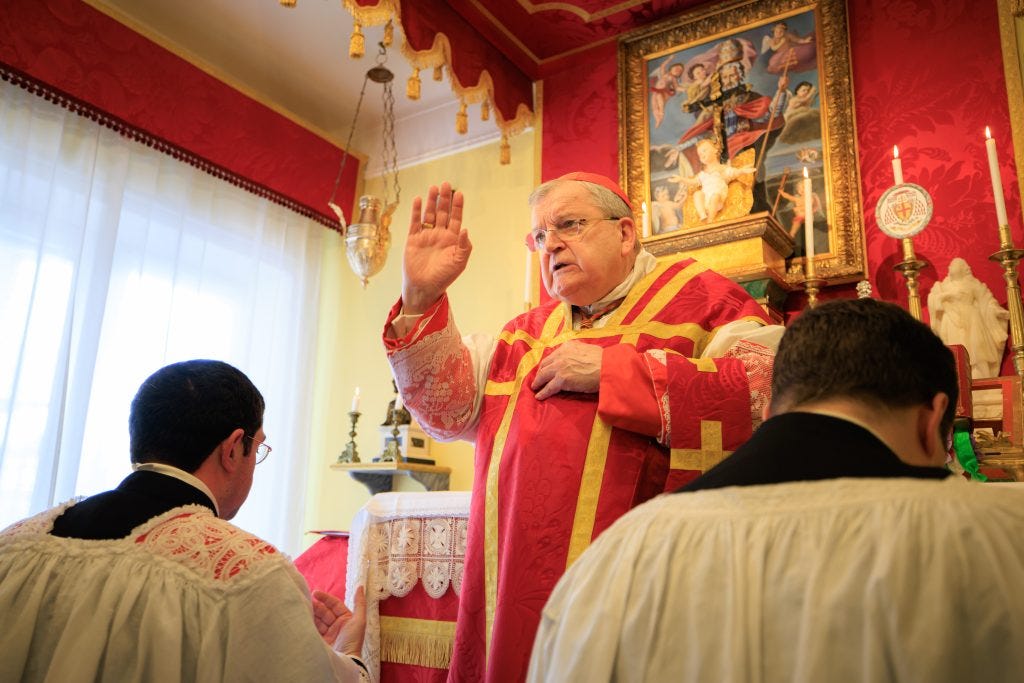
Haynes: Now, of course, we had just very recently the March for Life in the U.S., and I thought it was very welcome and very notable that the Pope sent his personal message.
Cdl. Burke: Oh yes, that was wonderful. I read it, and it was certainly just what the people would need to hear from the Supreme Pastor of the Church. I’m very grateful that the Holy Father has done that, because the March for Life faithfully since the time of that disastrous Supreme Court decision of Roe v. Wade has been a tremendous witness to the inviolability of human life from the moment of conception. Even though we had a reverse of Roe v. Wade, there is still a terrible culture of abortion in the United States: around a million babies killed in the womb every year.
I think this is really infanticide. So we have to continue the very strong witness and try to promote the cause of life. And of course, the secularists, the materialists who are promoting abortion on demand and promoting this gender ideology and so forth – they’ve become ever more active and so we have to be attentive and use especially the social media. This is a way to communicate with people very effectively today because many people for whatever reason don’t think deeply about these matters.
The agents of abortion, the agents of euthanasia, they don’t tell you what the reality is. So we need to have these means of communication by which people are told the truth because any reasonable human being who is told what an abortion is, will not be in favor of it. It simply goes against our whole nature. The first law of nature is self-preservation, is the defense of human life. The second law has to do with the family. And then thirdly, with the worship of God, the freedom of worship.
I’m so grateful to His Holiness for that message. Also – I didn’t get to read yet what Vice President Vance said, I believe that he was at the march – but he’s a good example of someone who gives witness to the truths that are taught by our Catholic faith, but they’re truths of the moral law. He gives witness to those in public life.
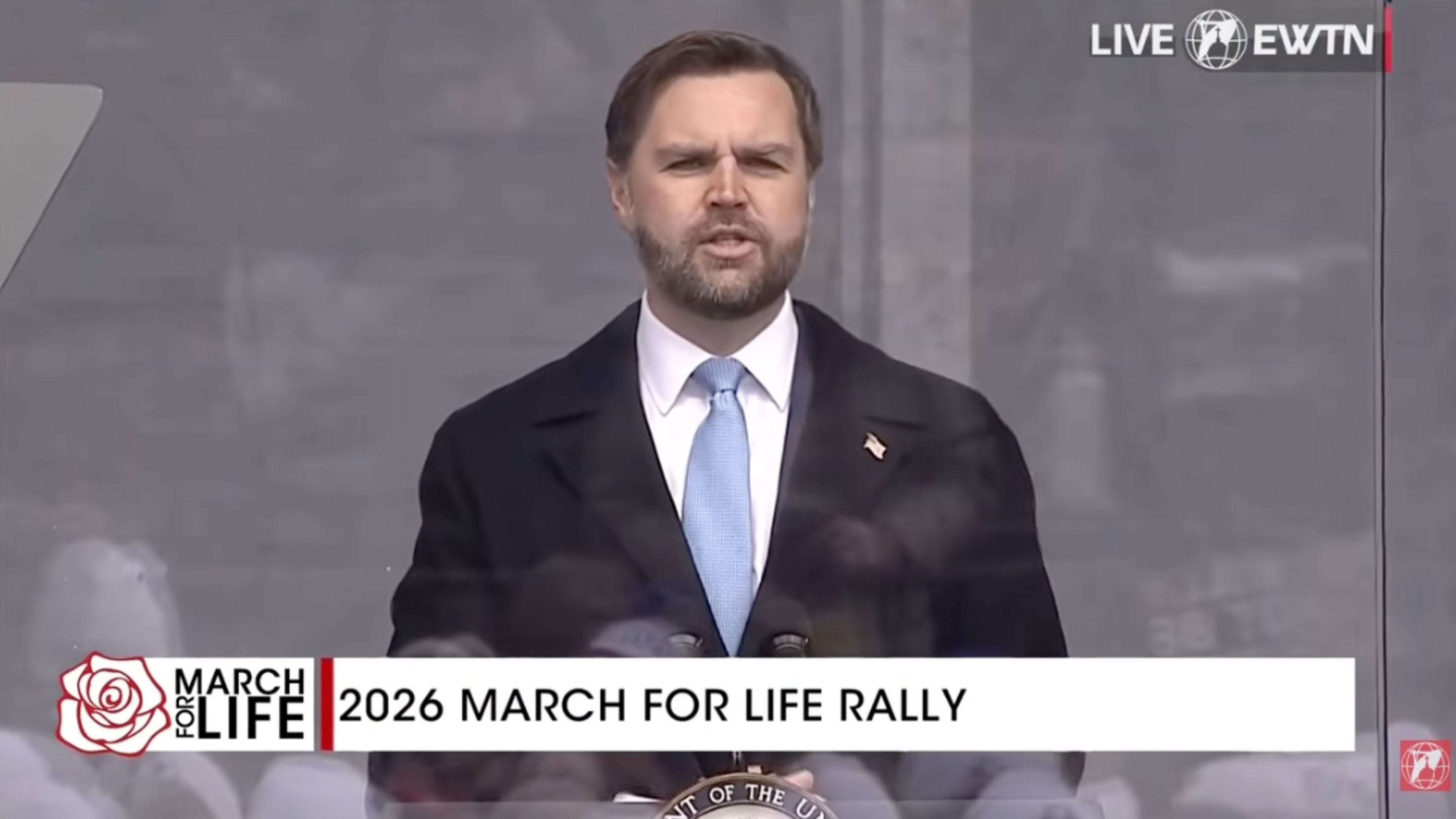
Haynes: I thought the Pope’s message to the March for Life was particularly welcome, because we have seen in some recent years somewhat of a debate amongst U.S. Catholics as to whether abortion is the preeminent moral issue or not. Do you think that some in the Church have perhaps become somewhat numb to abortion because there seems to be, not everywhere, but there seems to be some reticence to give it the seriousness that it deserves in opposing it and responding to abortion.
Cdl. Burke: Well, there has been a confusion in the Church with regard to moral questions which pertain to human life. There are questions of intrinsic evils, for instance the killing of an innocent, defenseless human life is always and everywhere wrong. It’s intrinsically evil. The taking of the life of someone who’s burdened by years or illness or severe special needs is always and everywhere wrong.
These evils are confused with questions with regard, for instance, to the environment and to immigration and other related issues, which are questions of prudential judgment. For instance, the question of immigration. The Church has always taught that a nation should receive true refugees, but to the degree that it’s able to really help them and also to the degree that they’re truly refugees, that they have no place else to go.
So to say that the Church is opposed to indiscriminate immigration as contrary to their respect for human life, this confuses people and so they think, well, abortion is just like that and so it’s not that important, [or] euthanasia is an issue where we can have different perspectives.
While you can have a debate about prudential issues regarding immigration, regarding the environment, there is no debate with regard to abortion. It’s not a question of a prudential judgment. It’s a question of an action that is always and everywhere wrong.

Haynes: One of the other aspects that the Holy Father dealt with in his State of the World Address was this increasing encroachment on free speech and he linked it to the spread of anti-life ideologies. Now that’s something we’re certainly seeing a lot of in my own native land of England, perhaps not quite as much in America as yet?
Cdl. Burke: Well, there have been dangerous signs, for instance, under the last administration. It’s clear that the Federal Bureau of Investigation had identified Roman Catholics as extremists simply because we were opposed to abortion, euthanasia, opposed to the gender ideology. But I know it’s also a problem in England. It concerns me very much. I’ve tried in my own way too, to alert people that the question of the freedom of religion, which is a fundamental good of the moral law, is being called into question.
I remember President Obama at one point said, he defined the freedom of religion as freedom of worship. He said, whatever you do within the four walls of your church, you’re free to do, but the minute you step outside, you have to do what we tell you, even in imposing, for instance, on a religious community – a wonderful religious community, the Little Sisters of the Poor – trying to impose upon them practices against the moral law.
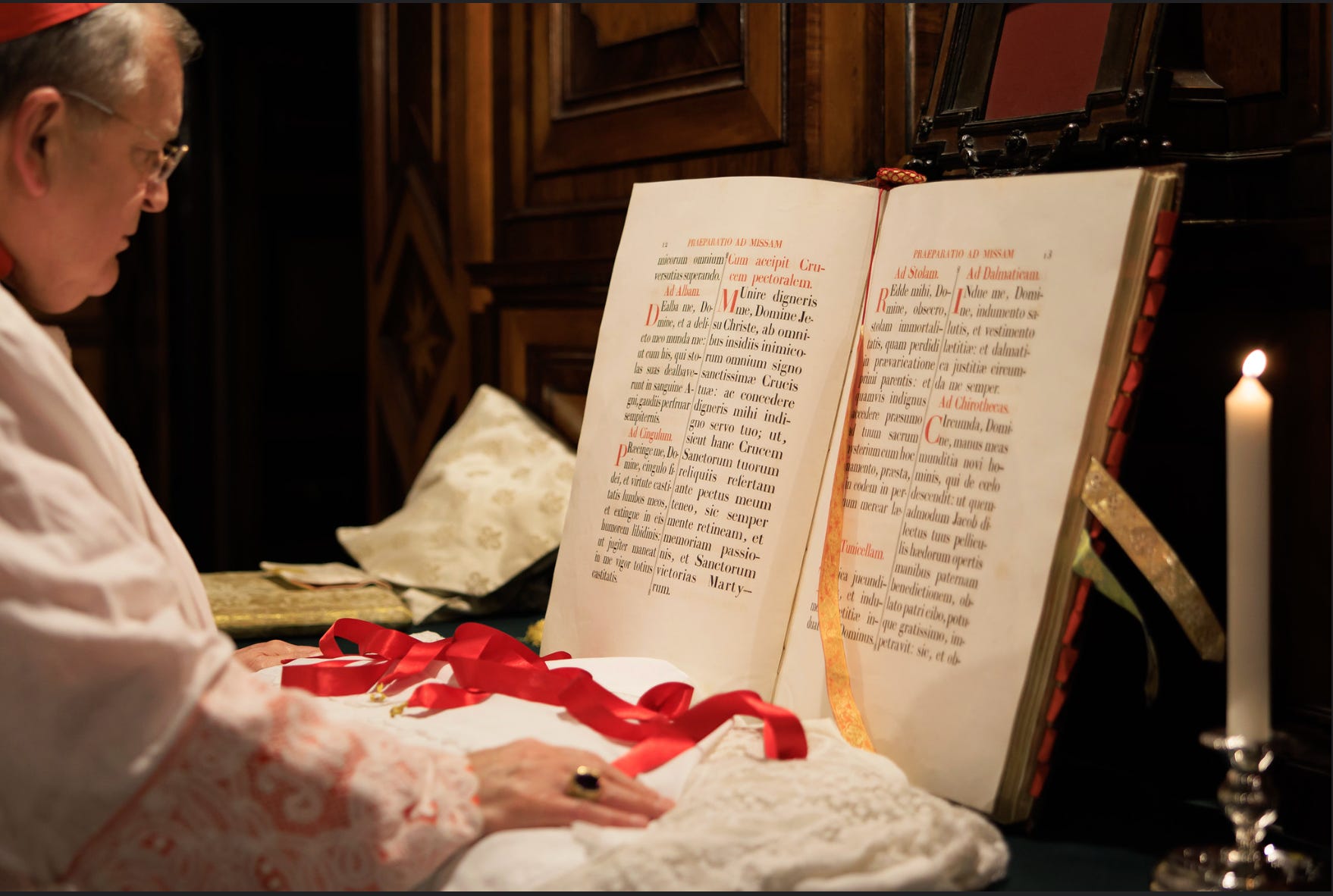
Haynes: Given that aspect, and especially now this increasingly curated or censored digital age in which we do live, how do you envisage the future of either Catholic activism in itself or particularly pro-life activism as well, because those are increasingly under-target?
Cdl. Burke: The Church’s teaching has to be stated clearly by Her pastors and this is of course the primary responsibility of the Roman Pontiff and the bishops in communion with him, and then to find the means to communicate this. There are a lot of wonderful initiatives that are very supportive of human life, of the family, of the freedom of religion, and the Church needs to support them and also utilize the work of these well-informed, highly competent, and very effective laity. And of course they can be priests and religious too, but it’s principally a work of the laity. The Church [should] support this and then utilize it in order to help the faithful to make the right decisions in their families and their individual lives, and of course in the wider community.
Haynes: Finally, you’ve mentioned the issues relating to the sanctity of life, which I think is at the core of all of these moral questions. We have seen in recent years, the U.K. and the U.S. in 2024, I believe, they had record low fertility. In China – they’ve just had their own record low. At the same time, we’re seeing huge numbers of abortions, particularly now via the contraceptive pill.
You’ve often highlighted the messages of Our Lady of Fatima and the importance of that in day-to-day life. How do you see this aspect and this attack on the sanctity of life as part of that attack on marriage and the family of which Sister Lucia warned?
Cdl. Burke: Yes, well when you have the removal of the essentially life-giving aspect from the Conjugal Act, through the practice of contraception, this is the port of entry for an attack on marriage, first of all, because this will very quickly lead a couple to be distanced from themselves – because this act represents in a certain way fully their love for each other, total gift of themselves for each other, which of its very nature is life-giving – not that every conjugal act results in conception, but the meaning is complete openness to life.
When that’s taken away, then the marital affection will inevitably grow cold. And at the same time, of course, it leads to the idea that if there is a conception of a human life that we can just destroy it. What has to be understood and is not understood by many is that most of the methods of contraception are abortifacient. They actually end a life which is at its beginning through the conjugal act.
So we have to restore in the instruction and the education of children and young people, the understanding that human sexuality is not some kind of entertainment or just for pleasure and so forth, but it has to do with the whole mystery of the love that God places in the heart of man and draws a man and woman together in marriage. It is the fundamental understanding that Pope St. John Paul II called the theology of the body. The true meaning of our human sexuality is that it’s not for lust, but it’s for love. Then we will see that husbands and wives will gladly welcome children and will understand that the sacrifices that are made in order to have a family are more than repaid by God’s blessings.
That’s the experience that I had in my own family and it’s an experience we read in the whole history of the lives of the saints and so forth. This centrality of the family, of the love of a man and woman which creates a home. A home fundamentally is not just for the man and woman but for their offspring, and couples, young couples especially, need to be taught in this way.
So this is part of what Sister Lucia saw in the vision and the apparitions of Our Lady – this apostasy, this abandonment of Christ, abandonment of the Gospel, abandonment of the fundamental moral law that leads us then to rebel against God and leads to our self-destruction. That’s what’s happening in a country like China that for years has been aborting babies. It used to be they were limited, I think, to two children they could have in the family. And I think there was a distinction made with regard to whether the child was male or female, but I’m not certain about that.
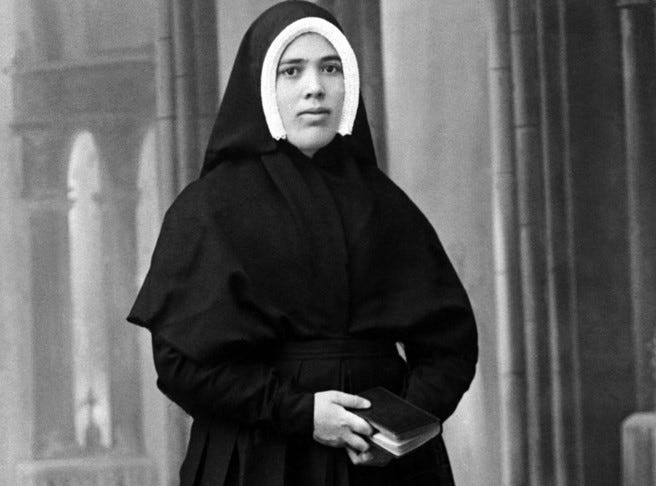
But that inevitably is going to lead to the death of a nation. And we see it, too, in the United States. Of course it has an effect in the Church too in the sense that where families are not generous, where the love of a husband and wife is not generous in having a family, having many children, there are less children to receive the call to the priesthood and to the religious life in the Church.
So it affects everything and then in turn, when there are not good priests and good religious, the husbands and wives are deprived of a very important inspiration and help in their married life. One of the clearest impressions that I had from my childhood was the importance of the priests and the Sisters – who taught us in the school – to my parents, the respect they had for them and how much they helped our family.
Haynes: Your Eminence, thank you for your time and for your words as well.
✍🏼 Choose Life! ⤵️
https://claude.ai/public/artifacts/e765c695-65da-4ded-9cb4-a3955bfd493e