Charlotte's Bishop Martin issues formal ban on altar rails
Bishop Martin of the Diocese of Charlotte has issued his ban on the use of altar rails, ushering more liturgical strife into the already distressed diocese.
VATICAN CITY (PerMariam) — Usage of altar rails or any form of kneelers to receive Holy Communion will be banned from the New Year in an embattled U.S. diocese.
Announced via a pastoral letter dated December 17, the new norms for the reception of Holy Communion in the Diocese of Charlotte were issued by Bishop Michael Martin OFM.
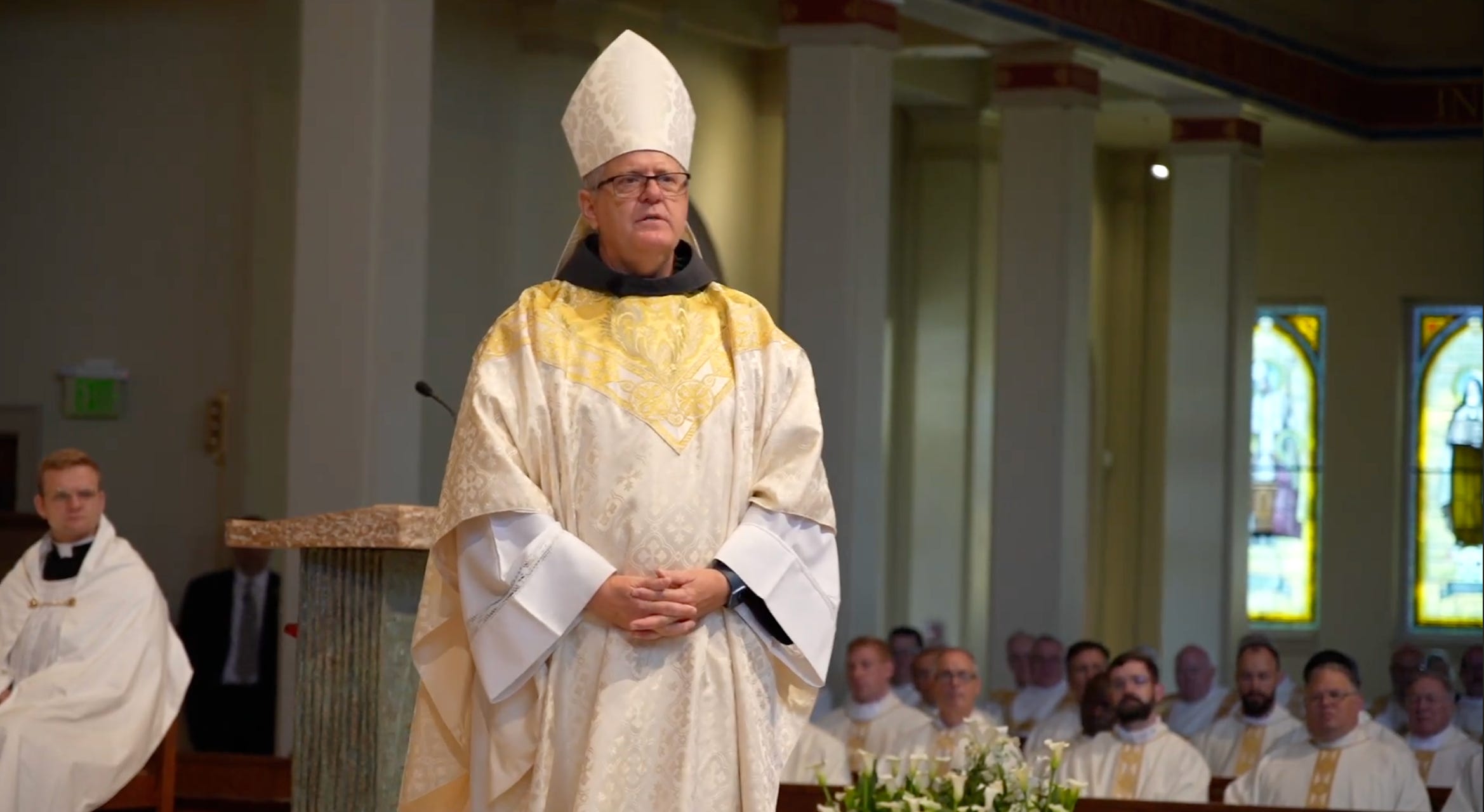
“The episcopal conference norms logically do not envision the use of altar rails, kneelers, or prie-dieus for the reception of communion,” Martin wrote. “Doing so is a visible contradiction to the normative posture of Holy Communion established by our episcopal conference.”
As a result of Martin’s letter, notable changes will take place in the diocese. The use of “altar rails, kneelers, and prie-dieus” is to be prohibited for receiving Communion in “public celebrations” as of January 16, 2026. So also are any temporary or movable kneelers to be removed by that time.
Martin ordered all “clergy, catechists, ministers of Holy Communion, and teachers” to inform Catholics about the “normative posture” in the U.S. for receiving Holy Communion – namely, standing as opposed to kneeling.
Almost grudgingly though – especially given his former writings against kneeling – Martin cited the United States Conference of Catholic Bishops (USCCB) rule which allows for Communion to be received standing or kneeling.
He also noted that the Vatican’s document Redemptionis Sacramentum categorically preserves the right of a Catholic to receive Holy Communion kneeling.
However, “the normative posture for all the faithful in the United States is standing,” Martin noted, and thus his ban on the use of kneelers will forcefully encourage that.
Martin was appointed to lead the diocese in spring 2024, having served only two years as a parish priest since his priestly ordination in 1989.
He promptly has been at the center of a number of controversies in the formerly thriving diocese, as he has made moves to curtail the use of altar rails, Latin language, priest’s prayers before and after Mass, Ad Orientem worship, ornate vestments or traditional acts of reverence by the celebrant during Mass.
In late May the bishop sparked widespread backlash after a document was leaked, documenting bizarrely restrictive measures upon the Novus Ordo liturgy, some of which would have been in violation of liturgical law.
Following the outrage amongst laity and clergy he backpedalled, but sources told The Pillar that he remained steadfast in his desire to expunge the use of altar rails: “that’s his big thing, he’s really focused on that.”
Just a week before that Martin had implemented sweeping restrictions on the traditional Mass. Further dismay spread amongst the diocesan faithful when Martin forthrightly admitted that the sole chapel he had expelled the traditional Mass to – in lieu of multiple Masses at multiple locations – was deliberately designed to be too small to accommodate the anticipated crowds.
The bishop’s latest liturgical directive appears to have thus achieved his long-desire goal of doing away with kneeling at the altar rails for Holy Communion. Already at Masses celebrated over the summer he had been gradually implementing a ban on the usage of kneelers, which will now become diocesan policy as of mid-January.
Liturgy to take center stage in Rome
Such a style of liturgical upheaval might well become the part of the upcoming meeting between Leo XIV and the cardinals next month. Under the express command of the Pope, members of the College of Cardinals will be discussing the question of the liturgy when they meet in consistory in early January.
It will be the first opportunity for many to express their thoughts and concerns on various matters including the liturgy, and make such thoughts known directly to the Pontiff.
The news was broken by a colleague in the Vatican press corps, Nico Spuntoni, whose undervalued but reliably sourced reporting has often produced such revelatory insights into the inner workings of the Vatican.
Revealing the contents of a letter sent from Leo XIV to the College of Cardinals, Spuntoni presented the central themes which will guide the discussion during the Extraordinary Consistory of January 7 and 8.
Synodality is to be discussed, as is the liturgy. The cardinals have been tasked to read two texts published by Pope Francis by way of preparation: Evangelii gaudium and Praedicate evangelium.
Such a meeting is a direct result of the concerns raised by many cardinals during the recent conclave – concerns brought about by the fact that Pope Francis very rarely held consistories. Even when he did hold them, infrequently, they were tightly controlled and open discussion was nonexistent.
Leo’s selection of the liturgy as one of the key questions for the cardinals to study is notable, and appears as a recognition on his part of the immense chaos and strife present in the Church in recent years on this point.
Spuntoni confirmed to this correspondent that the Pope’s letter does not mention the traditional Mass directly, but given the prominence of the topic and the presence of key proponents at the consistory, it is anticipated to be raised on the floor.


Prayers, we must pray for this bishop and his flock, that the faith of the children of Mother Church is protected from this scandal.
The sacred liturgy is the ground zero battleground for orthodoxy and reverence because there is nothing the devil hates more than the Catholic Mass (and Our Lady). Thus the Holy Eucharist and the Blessed Virgin will be the areas where he concentrates his most vicious attacks: the Two Pillars of St. John Bosco's prophetic dream.